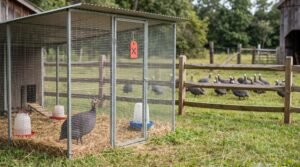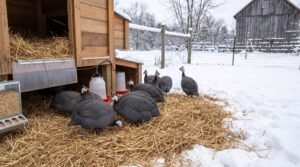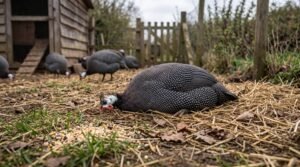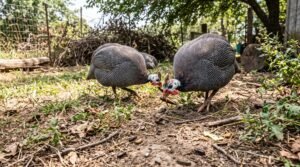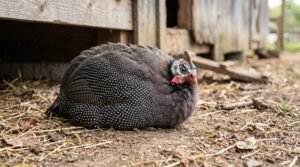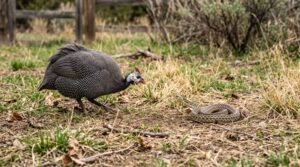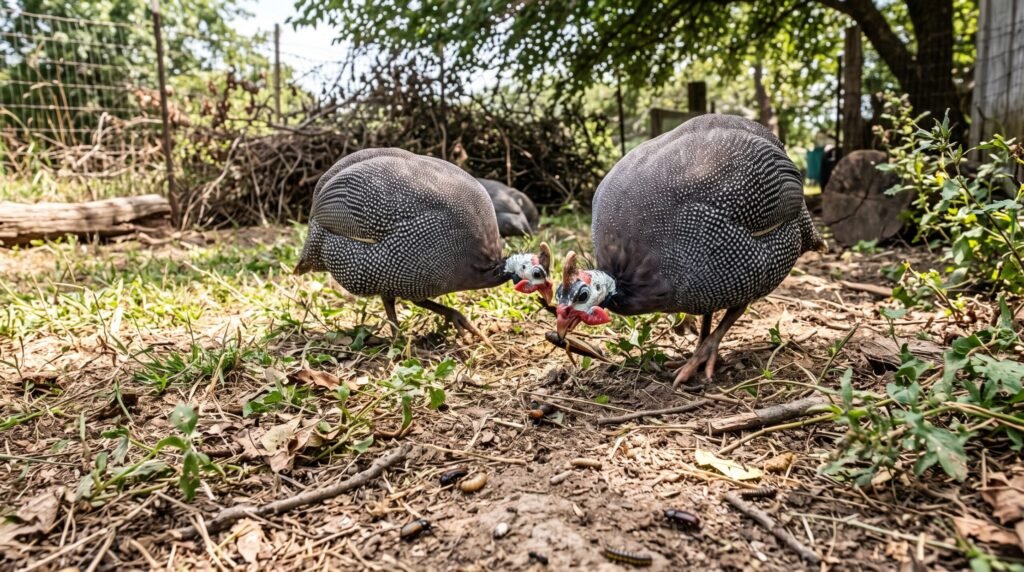
Guinea fowl eat a wide range of pests, including ticks, grasshoppers, crickets, beetles, caterpillars, flies, ants, slugs, and snails. A flock will sometimes go after mice, small rats, and even small snakes too. They’re at their best on insects and slugs within beak reach, but they won’t solve every pest problem on their own.
Walk outside with a flock of guineas and you’ll see why people swear by them. They never stop moving. The whole group sweeps through tall grass, fence lines, and garden edges with heads down, snapping up anything small enough to swallow.
That reputation is mostly earned, but a few claims online are stretched. Below I’ll go through exactly which pests guinea fowl eat, what the research says about the big ones like ticks, and where you should keep your expectations realistic.
Here’s the short version of what guinea fowl go after and how much you can count on them.
| Pest | Examples | What to expect |
|---|---|---|
| Ticks | Adult deer ticks, wood ticks | They eat them, but not enough to wipe out a population |
| Grasshoppers and crickets | Grasshoppers, locusts, field crickets | A favorite and a reliable target |
| Beetles | Japanese beetles, potato beetles, bean beetles | Good control on anything within reach |
| Caterpillars | Garden caterpillars | Regular snack when exposed |
| Flies, ants, spiders | Common yard insects | Opportunistic snacking |
| Slugs and snails | Garden slugs, snails | Good, especially on damp mornings |
| Rodents | Mice, small rats | Occasional kills, not a rodent-control plan |
| Snakes | Small snakes | Mobbing and harassing, results vary |
| Mosquitoes and fleas | Resting mosquitoes, fleas | Don’t count on them |
Ticks: Eaten, but Not Eliminated
Ticks are the main reason many people bring guineas home, so let me be upfront. Guinea fowl do eat ticks.
Penn State Extension’s review of the research found that all three North American studies recorded guineas eating adult ticks, and two reported that this lowered adult tick numbers. The problem is nymphs. Those tiny juvenile ticks are the ones most likely to bite a person unnoticed, and the two studies that checked for them found no drop in their numbers. The birds also picked up nymphs themselves, which may add ticks to the area. Penn State’s conclusion is that guineas aren’t effective as a stand-alone tick control.
You’ll also see claims that a guinea eats thousands of ticks a day. I haven’t found any research that backs up a number like that.
My advice is to treat your flock as one layer of tick management, alongside mowing, clearing leaf litter, and checking yourself after time outdoors. If ticks are the whole reason you want birds, my breakdown of how well guinea fowl work for tick control goes into it in more detail.
Grasshoppers, Crickets, and Locusts
If I had to pick the pest guineas handle best, it’s grasshoppers. They’re large, they sit on top of the grass, and guineas hunt insects living close to the surface, so they get found fast.
It’s common to see two or three birds racing across the yard after the same grasshopper. Extension sources also list crickets and flies among the insects guineas are used to control, and grasshoppers can strip a garden quickly. A flock working your field edges during summer helps keep those numbers down.
Beetles and Caterpillars
Beetles are another strong match. University of Maine Extension specifically mentions Japanese beetles as a pest guineas can help with, and keepers commonly report birds going after potato beetles and bean beetles as well. Caterpillars are on the menu too, as long as they’re out in the open.
There’s a limit here. Guineas can only eat what they can reach. Insects high in tree canopies, tucked under leaves, or living underground are mostly safe from them.
Flies, Ants, Spiders, and Other Small Insects
Beyond the headline pests, guineas snap up whatever small, crawling, or hopping thing crosses their path. Flies, ants, and spiders all fall into this group, and keepers also report birds picking off cockroaches and other yard insects.
None of this is dramatic on its own. But it adds up over a season, and it’s a big part of why guineas can reduce the need for chemical sprays around a homestead.
Slugs and Snails
Slugs are a documented part of the guinea diet, and keepers say snails go the same way. If your hostas or lettuce get chewed up every damp spring, an early-morning patrol from the flock can make a visible difference.
Mice and Small Rats
According to extension guidance on raising guinea fowl, flocks can kill and eat mice and small rats. The same source says their loud calls have been shown to discourage rodents from moving in, and if you’re wondering about that racket, I explain why guinea fowl are so noisy in a separate guide.
I’d still call this a bonus rather than a plan. If you have a real rodent problem, secure feed storage and proper trapping matter far more than a flock of birds.
Snakes
Reports on snakes vary a lot. The extension guidance above notes that flocks have been known to attack them. Some keepers say their guineas mob and kill small snakes, while others say the birds mostly harass them and move on.
Think of the snake behavior as a perk, not a snake-control strategy. I also wouldn’t count on them around venomous species, since a curious bird can get bitten. What they do reliably is raise an alarm when something unusual shows up, which gives you a heads-up.
Weed Seeds
Not a pest in the insect sense, but worth knowing: University of Maine Extension notes that guineas eat weed seeds along with insects and worms. It’s a small side benefit, and one more reason a foraging flock cleans up a property.
Mosquitoes and Fleas: Don’t Count on Them
Mosquitoes and fleas show up on a lot of “what guinea fowl eat” lists, so let me add some context.
Extension material does list mosquitoes among the things young guineas eat, so a bird may pick off the occasional one. But mosquitoes fly and breed in standing water, which a ground-foraging bird doesn’t touch. I wouldn’t expect a noticeable drop in bites.
Fleas are mostly anecdotal. Some keepers report fewer fleas once guineas are on the property, but I haven’t seen solid research behind it.
The Trade-Offs: Bees, Seedlings, and Your Own Birds
Guineas don’t tell good bugs from bad ones. Extension guidance warns that they will eat honey bees, so keep them away from hives. They can also peck at young seedlings and ripe tomatoes, so the garden isn’t automatically safe.
And eating pests doesn’t make your birds immune to trouble. Ticks, mites, and other parasites can still affect them, so it helps to know the signs in my guide to guinea fowl parasites.
How to Get the Most Pest Control From Your Guinea Fowl
A few habits make a big difference in how much work your flock actually does:
- Let them range. Guineas patrol rather than graze, so they do their best work when they can free-range across a wide area.
- Choose adult birds. Extension guidance says that if pest control is your goal, adults are easier to care for than young guineas and do well on their own.
- Train them to come home. A reliable routine for returning to the coop at night keeps the flock safe and keeps them on your property.
- Protect them from predators. Foraging in the open puts them at risk, so plan your predator protection before you open the gate.
- Limit garden access. Let them in when plants are established, and keep them out while seedlings are small.
- Keep feeding them. Insects aren’t a complete diet, so provide a proper ration alongside foraging. My guide on what guinea fowl eat covers the basics.
- Talk to your neighbors. Guineas ignore property lines and a patrolling flock can wander far, so read up on keeping them out of a neighbor’s yard early.
Final Thoughts
Guinea fowl eat ticks, grasshoppers, crickets, beetles, caterpillars, flies, ants, slugs, and snails, and they’ll sometimes take mice, small rats, and small snakes. They’re excellent at insects and slugs they can reach, but they won’t eliminate ticks, mosquitoes, or a serious rodent problem. They also eat honey bees, so plan around your hives.
Your next step is simple. Walk your property and note where pests cluster, then decide where your birds should and shouldn’t range.
Which pest is giving you the most trouble right now? Share it in the comments, and if you want more ideas, browse the rest of my predator and pest control articles.
Frequently Asked Questions
How many guinea fowl do I need for pest control?
There’s no research-backed number. The researchers behind the original tick study didn’t measure how many birds are needed for effective control. University of Maine Extension suggests two to six birds as a small starter flock. Start small, watch where they patrol, and add more if your property is large. My guide to ideal flock size can help you decide.
Will guinea fowl destroy my vegetable garden?
Extension guidance says domestic guineas can eat large amounts of insects without harming garden vegetables or flowers, but young seedlings and ripe tomatoes are vulnerable. Limit access while plants are small. If you want to know what they’ll actually eat from the garden, see this list of safe fruits and vegetables for guineas.
Are guinea fowl better than chickens for pest control?
Guineas tend to roam much farther than chickens, so a flock covers more ground on pest patrol. Chickens eat insects and ticks too, though. Which one suits you depends on your goals, and how the two birds compare overall is worth a look before you decide.
Hi, I’m Rayyan. I raise guinea fowl and share practical, research-backed guides for backyard keepers and homesteaders. I combine hands-on flock experience with trusted poultry management and university extension resources to help you raise healthier, more productive birds — with confidence, not guesswork.