You can’t fully eliminate a guinea fowl’s urge to roam, but you can keep them close to home with early flock training, a well-placed coop, consistent feeding routines, and physical barriers where the wandering really matters. It takes patience, but most keepers get their flock to settle into a predictable range with the right setup.
If you’ve ever stood in your yard, arms out, trying to herd a shrieking guinea fowl off your neighbor’s porch, you already know these birds have a mind of their own. Guineas are only semi-domesticated, and roaming is baked into who they are. But that doesn’t mean you’re stuck apologizing to your neighbors every week. I’ve kept guineas for years, and I’ve learned that the birds who stay close to home aren’t the lucky ones — they’re the well-trained ones. In this guide, I’ll walk you through exactly how to reduce roaming, keep your flock (mostly) on your side of the property line, and keep the peace with the people next door.
- Start with keets, not adults — young birds bond to a location far more reliably.
- Keep new birds cooped up for several weeks before any free-range time.
- Build feeding and homing routines the flock can set their internal clock to.
- Position housing and food sources away from the property line.
- Use fencing, netting, or wing trimming only where boundaries truly matter.
- Accept that some roaming is part of the deal — guineas were never bred for containment.
Why Guinea Fowl Roam in the First Place
Guineas aren’t being defiant when they wander off — they’re doing exactly what their instincts tell them to do. Unlike chickens, which were bred over centuries for docility and a strong homing habit, guinea fowl are still close to their wild African roots. They don’t have the same homing instinct for a roosting space that chickens do, which is why training them to stay put takes real, deliberate effort.
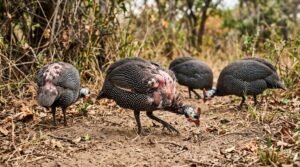
They also forage constantly. A flock will cover a surprising amount of ground each day hunting insects, seeds, and greens, and property lines mean nothing to a bird chasing a grasshopper. Guinea fowl can easily travel several hundred yards during their normal daily movement, which is more than enough to land them in a neighbor’s garden, driveway, or flower bed.
Flock size matters too. Guineas are deeply social birds, and a small group tends to feel unsettled and range farther looking for security in numbers. Keepers who work with fewer birds often notice more roaming, since guinea fowl do best in flocks of at least six. If your flock is small, that alone could be part of your roaming problem.
Raise Keets Instead of Adults
If you’re just getting started, this is the single biggest decision that affects how much your guineas roam later. Adult guinea fowl that are moved to a new property have no attachment to it and are notoriously difficult to settle in. Adult birds struggle to feel at home somewhere new, while keets that grow up on your land develop that sense of home naturally, since they’ve never known anywhere else.
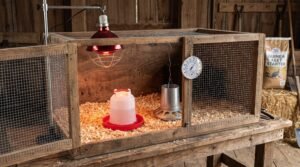
I always tell new keepers the same thing: if roaming is your biggest worry, start with day-old keets, not adults from a breeder’s existing flock. It costs you a few extra months of brooding and coop training, but it pays off every single day afterward. If you’re not sure what that process looks like week by week, I’ve laid it out in my guide to raising guinea keets.
Keep Them Confined Longer Than You Think You Need To
The instinct with any young bird is to let them outside as soon as possible. With guineas, resist that urge. Extended confinement in the early weeks is what builds their sense of “home base,” and skipping this step is one of the most common mistakes beginners make. A well-planned setup helps too — my rundown of coop and run requirements covers the space and layout that make confinement easier on both you and the birds.
Recommendations vary a bit depending on who you ask, but the pattern is consistent:
| Source’s guidance | Confinement period |
|---|---|
| Backyard Poultry (Training 101) | 2–4 weeks in the coop before any free-ranging begins |
| Ask Extension | 6–8 weeks for keets before letting them out into the yard |
| Homesteading Place | At least 2 weeks locked in day and night so the coop reads as home |
| The Little Green Wagon | 6 weeks to fully acclimate to a new property |
I tend to land on the longer end of that range, especially if you’re on a smaller lot near neighbors. The extra patience up front means less chasing birds off someone’s car later.
Once you do start letting them out, don’t fling the doors open to the whole flock at once. Releasing them in small groups at first helps, since individual birds tend to stay close to the rest of the flock rather than scattering. I usually let one or two out at a time for the first few days and watch how far they wander before pulling them back in.
Build a Routine They Can Set Their Clock To
Guineas respond well to predictability, even if they don’t respond well to fences. The most effective tool I’ve found isn’t physical at all — it’s a feeding and homing schedule the flock learns to trust.
- Train them to a treat sound. Shaking a bucket of scratch or a bag of mealworms every time you feed them teaches the flock to associate that sound with food, and it becomes one of the fastest ways to call them home from a distance.
- Feed them only at the coop, and only at set times. A guinea that knows dinner shows up at the same spot every evening has far less reason to keep wandering as dusk approaches.
- Lean into their evening instincts. Starting free-range time in the afternoon helps birds associate the fading light with heading back to the coop, and before long they start returning on their own.
- Be ready to herd stragglers. Even well-trained guineas occasionally misjudge how far they’ve gone. Some birds will range farther than intended and get caught out after dark, instinctively hunkering down under a shrub instead of coming home, so it helps to check on them an hour or so before sunset just in case.
Place the Coop and Feeding Areas Away From the Property Line
Where you put things matters as much as how you train the birds. Guineas naturally range outward from wherever their food, water, and roost are — so the location of those things effectively sets the center of their orbit.
Building housing well away from your property line, and giving your flock enough pasture space to forage without needing to cross it, encourages guineas to stay closer to their own territory. If your coop currently sits near the boundary with your neighbor, consider whether it can be relocated — a few coop design ideas might make that move easier than you’d expect. Even moving feeding stations 50–100 feet inward can noticeably shrink how often the flock ends up next door.
Physical Barriers: Fencing, Netting, and Wing Trimming
Training and routine will get you most of the way there, but if a specific boundary really can’t be crossed — a shared driveway, a neighbor’s prized garden, a busy road — physical barriers are worth adding.
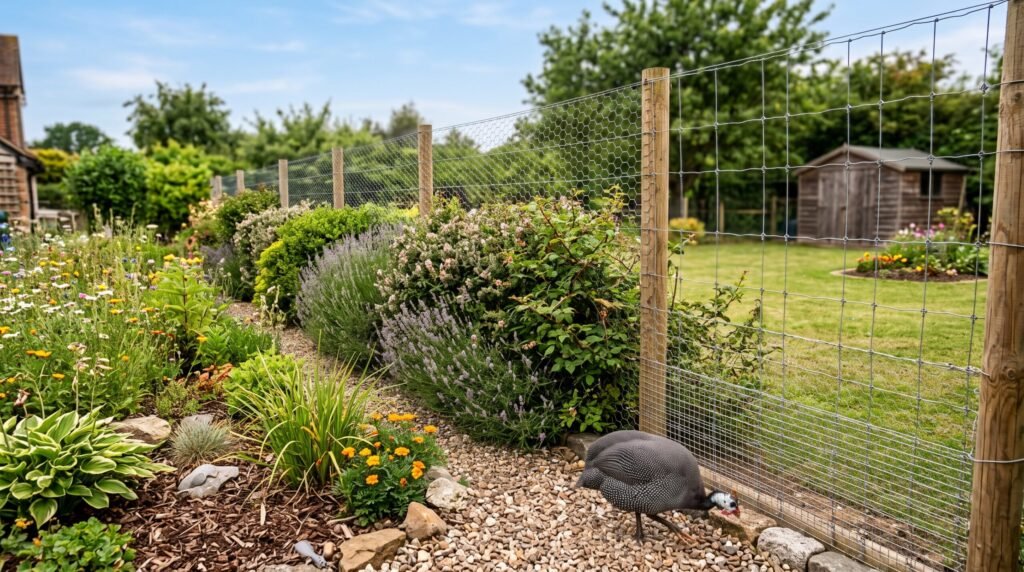
- Poultry netting or fencing. Placing poultry netting around the areas you want to contain them is one of the most direct ways to hold a boundary, though guineas are strong flyers and will often clear a standard fence unless it’s tall or the birds’ flight is limited.
- Wing clipping. Trimming the primary flight feathers on one wing throws off a bird’s balance enough to prevent sustained flight over fences — I go into more detail on why these birds fly so well in the first place if you want the full picture. It’s a widely used method, though guineas are fast and can be genuinely tricky to corner and handle, so be prepared for it to take some effort.
- Pinioning. This is a permanent, surgical removal of the wing’s pinion joint, done only in the first few days of life. It’s controversial, and plenty of experienced keepers choose not to use it, opting instead to simply accept that guineas will fly over fences and roam during the day.
- Full enclosure. You can keep guineas contained at all times in a large run, but it comes at a real cost. Keeping the birds cooped up permanently would solve the roaming problem, but it also defeats much of the point of having free-ranging guineas in the first place — their pest control, their foraging, their natural behavior.
I’d treat fencing and wing trimming as targeted tools for specific trouble spots, not a blanket solution for the whole property. Guineas that are fully confined tend to be noisier and more stressed, which can create a different kind of neighbor complaint entirely. If you’re still weighing how much freedom to give your flock, it’s worth reading through the trade-offs between free-ranging and keeping guineas confined before you commit to either approach.
Talk to Your Neighbors Before It Becomes a Problem
This part gets skipped more than it should. A short conversation before the birds start wandering saves a lot of tension later. Let your neighbors know you’re raising guinea fowl, that you’re actively working on keeping them contained, and that you’re happy to hear about any issues directly rather than finding out secondhand.
Some keepers offer to cover the cost of any damage the birds cause, since guineas are known for pecking at reflective surfaces like car bumpers and windows and occasionally leaving droppings on parked vehicles. It’s a small gesture, but it goes a long way toward keeping the relationship friendly while you work on the training.
Set Realistic Expectations
Even with every method in this guide, guinea fowl are not going to behave like a fenced-in flock of chickens. Guineas are known to fly, hop fences, and roam, and while you can train them to reliably return to roost each night, they largely know no boundaries once they’re out foraging during the day. If your lot is small or your neighbors are close, it’s worth being honest with yourself about whether guineas are the right bird for your situation before you invest heavily in a flock.
For most keepers with a bit of space and some patience, though, a combination of early training, a predictable routine, smart coop placement, and targeted fencing will keep the vast majority of roaming on your own property — with only the occasional guinea deciding the neighbor’s garden looked more interesting today.
Have you found a training trick that keeps your guineas closer to home? I’d love to hear what’s worked for your flock in the comments.
FAQ
Can guinea fowl be fully trained to never roam?
No. Even well-trained guineas that reliably return to the coop each night will still wander during the day while foraging. You can significantly reduce how far and how often they roam, but eliminating it completely usually means keeping them in a permanent enclosure, which sacrifices much of the benefit of free-ranging them.
How many guinea fowl should I keep to reduce roaming?
Most keepers see less scattering with a flock of at least six birds. Guineas are highly social, and small groups tend to feel less secure, which often pushes them to range farther in search of company or safety.
Will clipping my guinea fowl’s wings stop them from roaming?
Wing clipping prevents sustained flight, which stops them from flying over fences, but it won’t stop ground-level wandering. It’s best paired with fencing and routine training rather than used as a standalone fix.
At what age should I start letting guinea keets free-range?
Most guidance points to somewhere between six and eight weeks of confinement at minimum, with some keepers waiting until three to four months for full free-range access. Starting slow, with short supervised outings, tends to produce calmer, more homebound adults.
Hi, I’m Rayyan. I raise guinea fowl and share practical, research-backed guides for backyard keepers and homesteaders. I combine hands-on flock experience with trusted poultry management and university extension resources to help you raise healthier, more productive birds — with confidence, not guesswork.