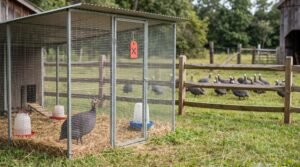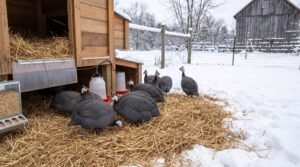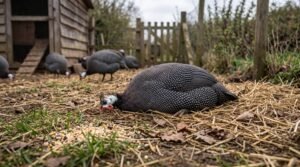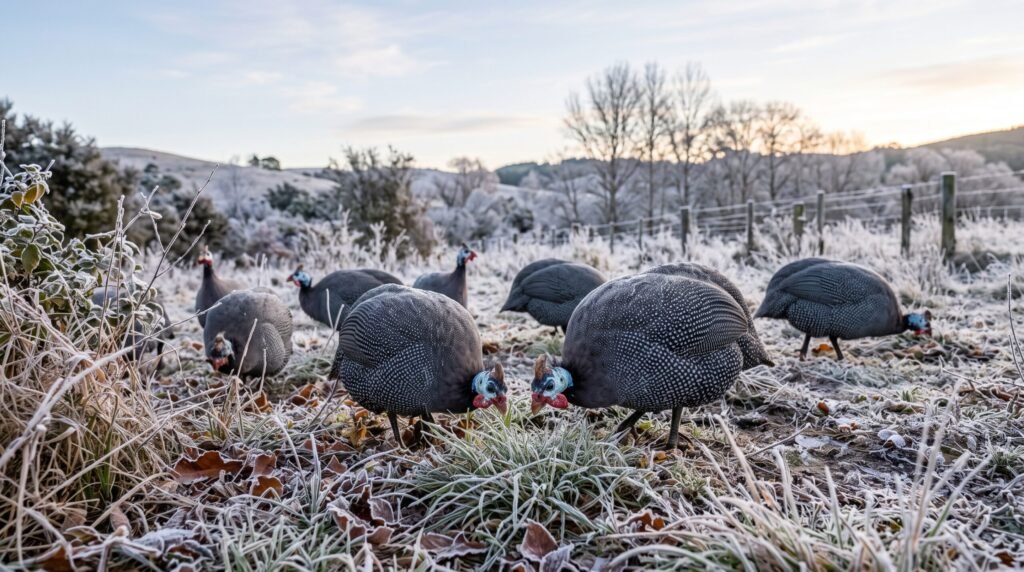
The week of your first hard frost, three things need your attention immediately: unfrozen water, a dry (not just warm) coop, and a close eye for frostbite on your birds’ combs and wattles. Everything else can wait until the weekend — these three can’t.
I used to treat the first frost like just another cold morning. Then one January I found my waterer solid by 7 a.m. and two of my guineas with pale, stiff comb tips. Nothing serious came of it, but it scared me enough to change how I handle that first cold snap every single year since. Here’s what actually needs to change this week, not sometime this winter.
Here’s the short version if you only have a minute:
- Water freezes faster than you expect — check it twice a day for now
- Moisture, not cold, causes frostbite — ventilation matters more than warmth
- Don’t seal the coop up tight — that traps the humid air that causes the real damage
- Watch combs, wattles, and feet on the first genuinely cold mornings
- Skip the heat lamp — it’s a fire risk and doesn’t actually solve the problem
Why the First Frost Is Different From “Just Cold”
Guinea fowl handle gradual cold reasonably well. What catches birds off guard — and catches keepers off guard even more — is a sudden overnight drop after weeks of mild weather. Birds haven’t fully adjusted yet, water systems haven’t been tested, and a lot of keepers are still running their coop the same way they did in September.
The first frost is really a stress test for your whole setup. Whatever’s marginal — a slow drip freezing overnight, a draft nobody noticed, bedding that’s been damp for a week — shows up hard on that first genuinely cold morning.
Water: Check It Twice a Day Starting Now
This is the single most urgent thing to sort out. Guinea fowl need consistent access to unfrozen water, and even a thin layer of ice on top of a waterer is enough to stop birds from drinking.
What I do differently the moment frost is forecast:
- Check waterers first thing in the morning and again in early afternoon
- Break or dump ice rather than assuming birds will figure it out
- Move to a heated waterer base or plan on manual swaps if temperatures are staying below freezing overnight
- Keep a backup container filled, in case the main setup freezes solid before you get to it
Dehydration in poultry causes health problems fast, and it can quietly reduce cold tolerance right when your birds need it most. This isn’t a “check it when you remember” task during frost week — it needs to be part of your actual morning and afternoon routine.
If you haven’t settled on a winter watering setup yet, this is the week to do it rather than improvising each morning — my broader winter care guide covers a few different approaches depending on how cold your area actually gets.
Ventilation Matters More Than Warmth
This surprises a lot of new keepers: the goal during frost season isn’t a warm coop. It’s a dry one.
Guinea fowl put a surprising amount of moisture into the air just by breathing and through their droppings. In a coop that’s sealed too tightly for winter, that moisture has nowhere to go. It condenses on the coldest surfaces — including a bird’s comb and wattles — and that’s what actually causes frostbite, not the cold air itself.
What I check the week of first frost:
- Vents up near the roofline are still open and clear
- No drafts are hitting birds directly at roost height
- Bedding is dry, not damp or compacted — if it’s been a while since a real clean-out, refreshing the coop before frost hits makes a noticeable difference
- There’s no strong ammonia smell, which signals poor airflow
It feels counterintuitive to leave vents open when it’s freezing outside, but a coop with good airflow and dry bedding will protect your flock far better than one that’s sealed up and humid.
Skip the Heat Lamp
I get asked about this every single frost season, so it’s worth addressing directly. Heat lamps feel like the obvious fix, but they carry real fire risk in a space full of dry bedding and feathers, and guinea fowl generally don’t need one anyway.
A healthy adult guinea fowl with a dry, draft-free shelter can handle genuinely cold nights without supplemental heat, as long as housing basics like roost height and space are already sorted. If you’re tempted to add a heat source, put that energy into the ventilation and bedding fixes above instead — they solve the actual problem.
Watch for Frostbite the First Few Cold Mornings
Once frost actually hits, take a few extra minutes each morning to actually look at your birds, not just count them.
Signs worth checking for:
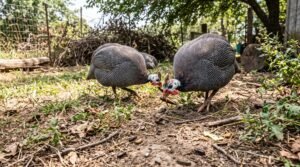
- Pale, whitish, or grayish tint on comb or wattle tips
- Stiffness or swelling around the comb
- Birds favoring a foot or reluctant to walk on cold ground
Guinea fowl have smaller combs and wattles than many chicken breeds, which helps, but it doesn’t make them immune. Catching mild frostbite early — and correcting the moisture problem in the coop — usually stops it from getting worse.
Feed a Little Extra on the Coldest Nights
Birds burn more energy staying warm overnight once temperatures drop hard. A small handful of scratch grain or extra feed in the late afternoon before roosting gives them fuel to generate body heat through a cold night, without needing to change their whole diet.
I don’t do this every night all winter — just on the nights that are noticeably colder than what the flock’s adjusted to, like that first real frost. If you want a fuller picture of how feeding needs shift with the seasons, my guide on how often to feed guinea fowl breaks it down by age and time of year.
This Week’s Quick Checklist
If you want the condensed version to actually walk through this week:
- [ ] Check water morning and afternoon; have a backup on hand
- [ ] Confirm roofline vents are open and clear of debris
- [ ] Check bedding for dampness and refresh if needed
- [ ] Walk the coop for drafts at roost height
- [ ] Look over combs, wattles, and feet the first cold mornings
- [ ] Add a small extra feeding on the coldest nights
- [ ] Leave the heat lamp in storage
Final Thoughts
The first frost isn’t the start of “winter mode” — it’s a one-week window where a few specific things need closer attention than usual. Water, ventilation, and a quick daily look at your birds cover almost everything that actually goes wrong this time of year.
Did your first frost catch you off guard this year, or did you get ahead of it? I’d like to hear what part of your setup got tested the most — and if your coop needs a closer look before the next cold snap, it’s worth walking through now while you’ve still got daylight to work with after you get home.
Frequently Asked Questions
How cold can guinea fowl handle without extra heat?
Healthy adult guinea fowl with a dry, draft-free, predator-proof shelter generally tolerate freezing temperatures well without supplemental heat. Young keets and birds in poor health need closer monitoring and may need extra protection.
Why did my guinea fowl’s waterer freeze so fast overnight?
Standard waterers, especially metal ones, can freeze within a few hours once nighttime temperatures drop below freezing. A heated base or a routine of swapping waterers before bed and right after waking up usually solves this.
Is a small amount of frostbite on a guinea fowl serious?
Mild frostbite on comb or wattle tips is usually manageable once the underlying moisture problem in the coop is fixed. Watch the area for worsening swelling, discoloration, or signs of infection, and improve ventilation right away to prevent it from recurring.
Hi, I’m Rayyan. I raise guinea fowl and share practical, research-backed guides for backyard keepers and homesteaders. I combine hands-on flock experience with trusted poultry management and university extension resources to help you raise healthier, more productive birds — with confidence, not guesswork.