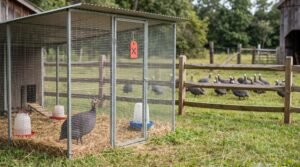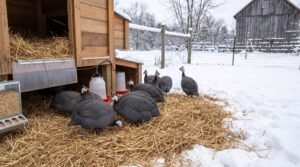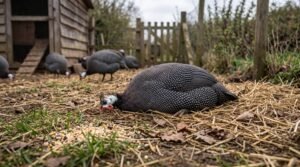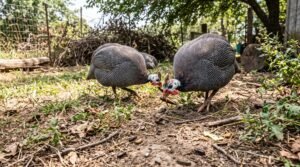
The molting season nobody really warns new keepers about isn’t the obvious annual one — it’s how much molting can look like illness, how early the first “mini-molts” start, and how much a molting bird’s mood and behavior can change. Most guides cover the basics of feather loss and protein needs. Almost none prepare you for how alarming it actually looks and feels the first time you see it up close.
I remember the first time one of my guinea hens went through a hard molt. She looked patchy, moved slower, and seemed almost irritable when I got near her. My first thought wasn’t “she’s molting” — it was “something is wrong with this bird.” I spent an evening comparing her to disease photos online before a more experienced keeper told me to just check for pin feathers. She was fine. She just looked like she wasn’t.
That gap — between what molting actually is and how unsettling it looks in the moment — is what I want to cover here.
Quick overview before we get into it:
- Molting can genuinely look like illness, especially the first time you see it
- There are “mini-molts” long before the first annual one, and most keepers have never heard of them
- Behavior and mood shift during molt, not just appearance
- Pin feathers are sensitive, and birds react to being handled differently during this time
- Not all feather loss is molt — knowing the difference matters
Why It Looks So Much Like Something’s Wrong
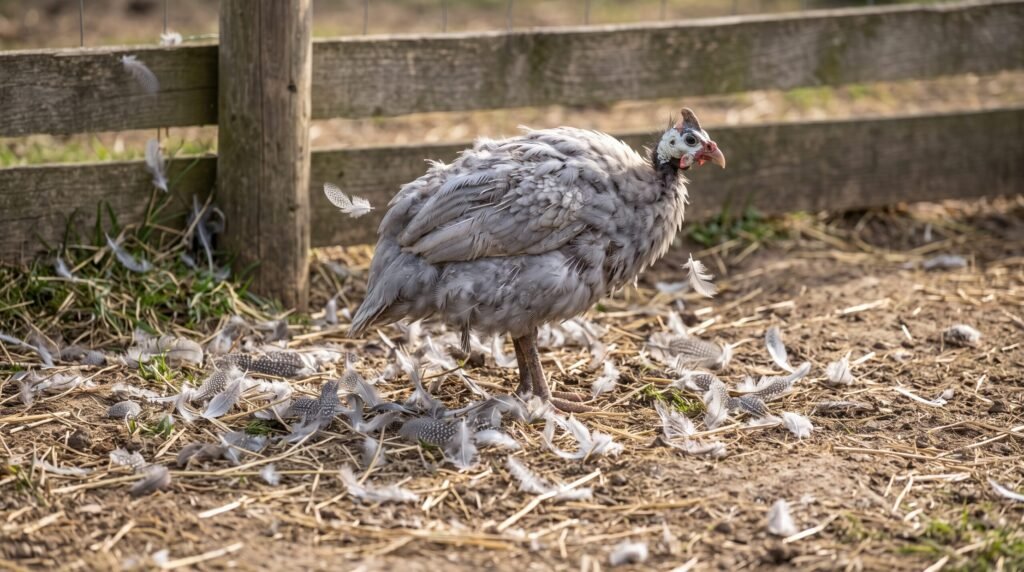
Nobody really prepares you for how rough a molting guinea fowl can look. Patchy skin, dull feathers, a generally disheveled appearance — it reads as sickness to anyone who hasn’t seen it before, and that instinct isn’t unreasonable. Sick birds often do look unkempt too.
The difference comes down to pattern and behavior, not just appearance. A guinea fowl in a normal molt still eats and drinks normally, stays reasonably alert, and loses feathers in a fairly gradual, progressive way rather than all at once in one spot. If a bird stops eating, has visible wounds or scabbing, or has red or swollen skin, that’s a signal to look beyond molt as the explanation — not just assume the timing lines up and move on.
I’ve found the fastest way to reassure myself is checking for pin feathers — the short, waxy-looking new feather shafts pushing through the skin. Their presence usually means healthy regrowth is already underway, which is a good sign the bird’s body is doing exactly what it’s supposed to.
The Mini-Molts Nobody Mentions
Most guinea fowl content jumps straight to talking about the annual molt, as if that’s the only one that happens. It isn’t.
Young birds go through early feather transitions well before adulthood — first replacing their initial down with juvenile feathers, and then going through at least one more feather changeover as they mature. If you’re raising keets and notice odd patchy feathering or a temporary rough phase months before you expected any “molting season” at all, this is very likely why.
I didn’t know this existed for my first year or two of keeping guinea fowl. I assumed molting was purely an adult, seasonal event, so an early feather change in young birds genuinely confused me the first time I saw it.
If you’re in the middle of raising a batch of keets right now, my week-by-week keet care guide walks through these earlier growth stages in more detail, so you can tell a normal developmental phase apart from something that actually needs attention.
Molting Changes Behavior, Not Just Appearance
This is the part that catches people off guard the most. A molting guinea fowl doesn’t just look different — it can act different too.
Things I’ve noticed in my own flock during a heavy molt:
- More irritability or reluctance to be handled
- Increased napping or reduced activity
- Less tolerance for being touched near newly emerging feathers
- Occasional quietness from birds that are usually more vocal
None of this means something is wrong. Growing in new pin feathers takes real energy, and those pin feathers are sensitive — they have an active blood supply while they’re developing, which is part of why birds get touchier about being handled during this stretch. Once feathers finish coming in, most of that mood shift fades on its own.
Not Every Feather Problem Is Molt
Here’s the flip side nobody mentions enough: keepers sometimes go the other direction and blame every instance of feather loss on molting, even when something else is actually going on.
A few things worth ruling out if feather loss doesn’t fit the usual pattern:
- Parasites — lice and mites cause feather damage that can look similar to molt but often comes with visible irritation or tiny debris at the feather base — my guide to guinea fowl parasites covers what to look for
- Feather picking — if bald patches appear out of the normal head-to-tail progression, especially with no pin feathers regrowing, another bird may be pulling feathers out
- Stress-related feather loss — sudden changes like extreme cold, lack of water, or a stressful event can trigger irregular feather loss that doesn’t follow molt’s usual pattern
If you want a fuller picture of what genuine illness looks like versus normal seasonal change, my guide to common guinea fowl diseases covers the warning signs that actually warrant concern.
What Actually Helps During This Stretch
Once you’ve confirmed it really is molt, there’s not much to “fix” — mostly, support the process rather than interrupt it.
A few things that have made a real difference for my flock:
- Handling birds less than usual, especially around active pin feather areas
- Making sure protein intake is genuinely adequate, since feathers are largely protein — my feeding schedule guide has the specifics on adjusting amounts by season
- Giving the flock a bit of extra patience if they seem more irritable or withdrawn than normal
- Not panicking over a temporary drop in egg production — this is normal and usually resolves once the molt finishes, as covered in my guide to improving egg production
If you want the deeper dive on adjusting feed and coop prep during this period more broadly, I’ve covered the practical side of fall care in a separate article, since it deserves its own full explanation rather than a quick mention here.
Final Thoughts
The part of molting season that actually catches people off guard isn’t the feather loss itself — it’s how disease-like it can look, how early it can start in young birds, and how much a bird’s temperament can shift while it’s happening. Once you’ve seen it once and know what you’re looking at, it stops being alarming and just becomes part of the yearly rhythm.
Has a molting bird ever had you convinced something was seriously wrong before you realized what was actually going on? It’s a rite of passage for pretty much every guinea keeper I’ve talked to — and if you’re seeing something right now that doesn’t quite fit the usual pattern, it’s worth taking a closer look rather than assuming either way.
Frequently Asked Questions
How can I tell if my guinea fowl is molting or sick?
A molting bird typically keeps eating and drinking normally, stays reasonably alert, and loses feathers gradually rather than all at once in one area. A sick bird more often shows reduced appetite, visible wounds or discharge, or unusually irregular, patchy feather loss that doesn’t follow a gradual pattern.
Do young guinea keets molt before they’re adults?
Yes. Keets go through at least one early feather transition as they mature, well before their first full adult molt. This can look like a mild, temporary rough patch and is a normal part of development rather than a sign of a problem.
Why does my guinea fowl seem grumpier during molt?
Growing in new pin feathers is energy-intensive, and those feathers are sensitive to touch while they’re developing. Many birds become less tolerant of handling and generally quieter or more withdrawn during a heavy molt, which typically resolves once new feathers finish coming in.
Hi, I’m Rayyan. I raise guinea fowl and share practical, research-backed guides for backyard keepers and homesteaders. I combine hands-on flock experience with trusted poultry management and university extension resources to help you raise healthier, more productive birds — with confidence, not guesswork.