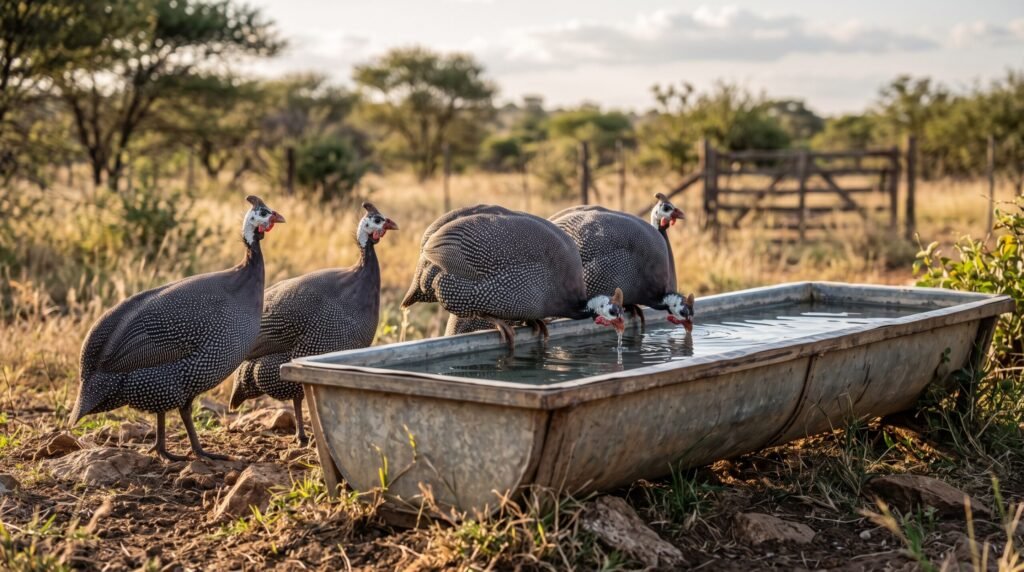
An adult guinea fowl typically drinks somewhere around 200-300 ml (roughly 1-1.25 cups) of water a day, and that can climb toward 400 ml or more once temperatures push past 77°F (25°C). Keets need far less in absolute terms, but they’re much less able to cope with going without it, so getting water right in the brooder matters even more than it does for adults.
I’ve raised guinea fowl through plenty of scorching summers and a few brooders full of clumsy keets, and if there’s one thing I’ve learned, it’s that water gets overlooked. Feed gets measured, coops get built, predator-proofing gets obsessed over — and water just sort of sits there, assumed to be fine. It usually is, right up until it isn’t. A knocked-over waterer on a 95°F afternoon can undo a healthy flock faster than almost anything else you’ll deal with as a keeper.
This guide walks through how much water guinea fowl actually need at every life stage, what changes their needs, and how to set up watering systems that won’t let you down.
- Adult guinea fowl: roughly 200-300 ml (0.2-0.3 liters) per bird per day in moderate weather
- Hot weather (above 77°F/25°C): intake can rise to 400 ml or more per bird
- Laying hens: need consistently available water, since egg production is water-intensive
- Keets (0-6 weeks): drink much less per bird, but dehydrate far faster than adults and need shallow, easily accessible water at all times
- General rule of thumb: birds drink roughly 1.6 to 2 times as much water as feed by weight, and that ratio climbs in the heat
Why Water Matters More Than Most Keepers Realize
Guinea fowl have a reputation as tough, low-maintenance birds, and for the most part, that’s earned. Once they’re past the keet stage, they’ll forage for the bulk of their own diet, shrug off cold, and generally take care of themselves. Water is the exception. It’s not optional, it’s not something they can forage for on a dry day, and unlike feed, they can’t store up a reserve to coast on.
Water does more inside a bird’s body than most people think about. It carries nutrients from the digestive tract, keeps the crop and gizzard working, regulates body temperature through panting, and supports every stage of egg formation in laying hens. When intake drops, digestion slows first, and heat regulation fails not far behind. Guinea fowl don’t sweat, so panting and water loss through respiration are essentially their only cooling mechanism — which is exactly why water needs spike so sharply in warm weather. University of Georgia Extension’s research on poultry drinking water backs this up directly: as environmental temperature climbs, birds drink significantly more to keep pace with what they lose through panting, and water intake can climb by roughly 7% for every one-degree Fahrenheit rise in temperature.
A bird that’s short on water eats less too. Feed and water intake are tightly linked, so a flock drinking less will almost always be gaining less weight or laying fewer eggs, even if the feeder looks full — which is one more reason it’s worth understanding what guinea fowl actually eat alongside how much they drink, since the two needs move together.
How Much Water Do Adult Guinea Fowl Need?
For a healthy adult guinea fowl in moderate conditions, plan on somewhere around 200-300 ml of water per bird, per day. That’s a loose range rather than a hard number — individual birds vary based on activity level, how much moisture they’re getting from forage, and their own body size. A guinea that’s ranging heavily through wet grass and eating water-rich bugs and greens will often drink somewhat less from the waterer than one confined to a dry run.
Temperature is the biggest variable by far. Once it climbs above about 77°F (25°C), water intake can rise to 400 ml per bird or more. In genuinely hot, dry conditions, I’ve watched my flock empty a waterer noticeably faster than they do in spring or fall — it’s one of the clearest signs a heat wave is starting to stress them before I’d otherwise notice.
A useful mental shortcut, borrowed from general poultry science: birds typically drink about 1.6 to 2 times as much water as they eat in feed, by weight. If you already track how much feed your flock goes through, you can use that ratio to sanity-check whether your water supply is keeping pace — and if the ratio looks off, it’s usually worth investigating rather than assuming it’s nothing.
Water Needs by Life Stage and Season
Guinea fowl don’t drink the same amount their whole life, and treating a keet’s water setup the same way you’d treat an adult’s is one of the more common early mistakes. Here’s how needs shift:
| Stage | Approximate Daily Water Need | Key Considerations |
|---|---|---|
| Keets (0-2 weeks) | Small volume per bird, but frequent sips | Shallow, drown-proof waterer; room-temperature water; check multiple times a day |
| Keets (3-6 weeks) | Increasing steadily with body size | Transition to a slightly larger waterer as they grow; keep it clean |
| Growers (6-12 weeks) | Approaching adult levels | Can move to standard poultry waterers |
| Adults, moderate weather | ~200-300 ml per bird | Standard gravity or nipple waterer, checked daily |
| Adults, hot weather (77°F+/25°C+) | ~400 ml or more per bird | Add extra waterers, keep water shaded and cool, check more often |
| Laying hens | Consistent access, at or above standard adult range | Water shortages can reduce or halt egg laying |
Keets Need Less Water, But Far Less Room for Error
Don’t let the small numbers fool you: keets are much more vulnerable to dehydration than adults, even though they drink less in absolute terms. Their small body size means fluid loss happens fast, and a brooder that runs warm — which many do, since keets need heat in their first weeks — pushes their water needs up even as it makes them more fragile if the water runs dry or gets fouled. If you’re setting up a brooder for the first time, it’s worth pairing this with a proper guinea fowl keet temperature chart, since heat and water management in those first weeks go hand in hand.
A few things I’ve found non-negotiable for keet watering:
- Use a shallow, drown-proof waterer (a chick font, or a standard waterer with marbles or clean gravel in the base for the first several days). Keets are clumsy, and a wet, chilled keet in a brooder can go downhill within hours.
- Keep the water at room temperature, not cold from the tap. Cold water in a heated brooder is an unnecessary shock to a bird that’s already working hard to regulate its temperature.
- Check water at least twice a day for the first couple of weeks. Keets kick bedding into waterers constantly, and a fouled or empty font can go unnoticed longer than you’d expect.
- If you’re hand-raising keets without a mother hen, plan to dip each keet’s beak gently in water once or twice when you first introduce them, since they normally learn to drink by watching an adult.
Hot Weather Sharply Increases Water Needs
Heat is where water requirements move the most, and it’s worth planning for before the first heat wave of the season rather than reacting to it. As temperatures rise, guinea fowl rely on panting to cool down, and every bit of that cooling costs them water. It’s not a small effect — consumption can meaningfully outpace what a flock drinks on a mild day, and a waterer sized for spring can run dry by mid-afternoon in July.
Practical adjustments that help:
- Add a second or third waterer during hot stretches so no bird has to compete or wait
- Position waterers in shade, since sun-warmed water is less appealing and heats up the birds further
- Refresh water more than once a day in extreme heat, both to keep it cool and to keep it clean
- Watch for panting, wings held away from the body, or lethargy — these are signs birds are already struggling to keep up with heat, and water access should be the first thing you check
If you keep guineas somewhere with real summer heat, it’s worth reading through my guide on preventing heat stress in guinea fowl during summer for a fuller rundown beyond just watering.
Cold Weather Has Its Own Watering Challenges
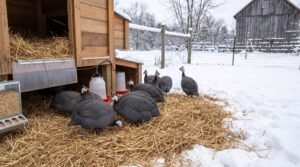
Winter flips the problem: water availability, not water demand, becomes the issue, since standing water freezes. Guinea fowl still need consistent access even when it’s cold, and a frozen waterer is functionally the same as an empty one. Heated bases or regularly swapping out frozen containers for fresh ones are the usual fixes. I go into this in more detail in my cold weather care guide, but the short version is: don’t assume the birds are drinking less just because it’s cold — check the waterer, not just the thermometer.
Signs Your Guinea Fowl Aren’t Getting Enough Water
Guinea fowl are stoic birds, and they don’t always make it obvious when something’s wrong until it’s fairly advanced. Watch for:
- Reduced feed intake or birds picking at feed without really eating
- Lethargy, hanging back from the flock, or reluctance to forage
- Sunken or dull-looking eyes
- A noticeable drop in egg production in laying hens
- Panting that doesn’t ease even when birds are resting in shade
- Pasty or unusually thick droppings
If you notice any of these, check the water supply first. It’s the fastest thing to rule in or out, and it’s often the answer.
Setting Up a Reliable Watering System
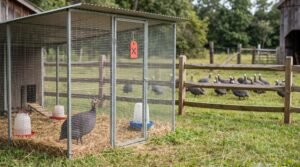
The single most useful habit I’ve built into my own routine is checking water before I check anything else each morning — before feed, before egg collection, before letting the flock out. A few setup choices make that habit easier to keep:
- Use multiple waterers for larger flocks, scaled to however many birds you’re actually keeping — if you haven’t settled on a target flock size yet, that’s worth working out first, since it also determines how much housing and run space you’ll need. One waterer per small group isn’t enough once you’re past a handful of birds; guineas can be pushy at a single water source, and subordinate birds may not get enough access.
- Elevate waterers slightly on a brick or platform to keep bedding, dirt, and droppings out, which also helps keep the water appealing enough that birds actually drink from it.
- Consider nipple or cup waterers for outdoor runs, since they stay cleaner than open founts and don’t spill as easily.
- Clean waterers regularly, not just when they look obviously dirty. Guinea fowl are less fastidious than chickens about avoiding fouled water, so buildup can happen without being visible at a glance.
- Place waterers away from roosting areas to cut down on droppings landing directly in the water.
None of this needs to be complicated. A clean, shaded, appropriately sized waterer checked once or twice a day covers the vast majority of situations — the setup only needs to get more elaborate as flock size or summer heat go up.
Frequently Asked Questions
How long can guinea fowl go without water?
Not long, and it depends heavily on temperature. In cool, mild weather, adult guinea fowl can tolerate a short gap of a few hours without serious harm, but in hot weather, even a few hours without water can bring on heat stress. Keets have far less tolerance and should never be without water for more than a short stretch. The safest approach is simply never letting a waterer run dry, rather than relying on how long birds can theoretically cope.
Do guinea fowl need less water if they free-range?
Somewhat, but not enough to skip providing water outright. Free-ranging birds pick up moisture from dew, insects, and green forage, which can reduce how much they drink from a waterer. That said, forage moisture is inconsistent — it depends on weather, season, and how much time birds actually spend in damp areas — so it’s not something to rely on as a substitute for a dependable water source.
Can guinea fowl drink the same water as chickens?
Yes. There’s nothing different about the water itself — clean, fresh water works for both species, and mixed flocks can share waterers without issue. The main difference is behavioral: guinea fowl tend to be less careful about avoiding contaminated water, so if you keep guineas and chickens together, it’s worth cleaning shared waterers a bit more often than you might for chickens alone.
Should I add anything to guinea fowl drinking water?
Plain, clean water is sufficient for most day-to-day situations. Some keepers add electrolytes during heat waves or after a stressful event like shipping or a predator scare, which can help birds rehydrate and recover. This isn’t something to do routinely, though — it’s a targeted response to a specific stressor, not a standing addition to daily water.
Water is one of those things that’s easy to take for granted right up until a hot afternoon or a knocked-over waterer turns it into an emergency. Take a look at your current setup and ask whether it would still be enough on the hottest day of the year — if you’re not sure, that’s usually a sign it’s worth adding a second waterer or moving one into the shade before you need to find out the hard way.
Have you noticed your flock’s water needs change with the seasons on your own property? I’d love to hear what’s worked for your setup — and if you’re still working out the basics of keeping guineas, my beginner’s guide to guinea fowl farming is a solid next stop.
Hi, I’m Rayyan. I raise guinea fowl and share practical, research-backed guides for backyard keepers and homesteaders. I combine hands-on flock experience with trusted poultry management and university extension resources to help you raise healthier, more productive birds — with confidence, not guesswork.