Most guinea fowl keets are ready to move outdoors between 6 and 8 weeks old, once they’re fully feathered and nighttime temperatures are holding above 55–60°F. Age alone isn’t the whole story, though — I’ve had fast-feathering batches ready a few days early and slow ones that needed an extra week, so the real answer comes down to reading your keets and your weather together.
I still remember the first time I moved a batch out too early. It was a warm afternoon, so I got impatient and skipped ahead of my own rule. That night the temperature dropped hard, and I spent an anxious hour with a flashlight checking on huddled, distressed keets before hauling them back inside. It taught me that “warm enough right now” and “warm enough all night” are two very different questions.
Here’s a quick look at how those two factors — age and feathering — typically line up before keets are ready for outdoor life.
| Age | Feathering Stage | Outdoor Readiness |
|---|---|---|
| 0–2 weeks | Mostly down, no true feathers | Not ready — brooder only |
| 3–5 weeks | Feathers coming in patchy, wings first | Not ready — still needs supplemental heat |
| 6 weeks | Body mostly feathered, head/neck may still show down | Borderline — only in mild, stable weather |
| 7–8 weeks | Fully feathered, including head and neck | Ready, if nights stay above 55°F |
Why Age Isn’t the Only Factor
Six weeks is the number you’ll see repeated everywhere, and it’s a reasonable starting point. But guinea keets don’t all develop on the same clock. Batch size, brooder temperature consistency, and even genetics can push full feathering a week or more in either direction.
I’ve raised keets from the same hatch date that feathered out completely differently — one group was fully covered by day 40, the other still had bare patches on the neck past day 45. If I’d moved both groups outside on the same calendar day, the slower one would have been in real trouble. That’s why feathering, not age, is the trait that actually determines whether a keet can regulate its own body heat without a brooder.
The Feathering Test: What “Fully Feathered” Actually Looks Like
Before keets go outside full-time, check for these signs rather than just counting days on a calendar:
- No visible down patches, especially around the head, neck, and vent — these are usually the last areas to feather in.
- Wing feathers fully grown out, not just the awkward, oversized “flight feathers before body feathers” stage keets go through around 3–4 weeks.
- A tight, smooth feather coat rather than a fluffy, uneven one — a keet that’s still fluffy hasn’t finished the transition.
- Active, energetic behavior with no huddling under the heat source during the day.
If even a few keets in the group are still showing bare skin or down, hold the whole batch back. Guineas are flock animals, and separating a slow-feathering keet from the rest for another week of brooder time is far less stressful than losing it to a cold snap outside.
Weather Requirements
The daytime high is almost irrelevant here — it’s the overnight low that will make or break a young guinea’s first weeks outside. A common and reliable benchmark is keeping keets in the brooder until nighttime temperatures consistently stay above 55°F, since a sunny 75°F afternoon can still be followed by a dangerously cold night in early spring or fall.
A few weather-related points worth building into your plan:
- Check a full week of forecasts, not just the move-out day. A cold front two days after transition can undo weeks of careful brooding.
- Avoid moving keets out right before or during rain. Guinea keets are notorious for chilling and dying quickly once wet, even at an age when they’d otherwise handle cold air fine.
- Wind matters as much as temperature. A drafty outdoor coop can feel much colder than the thermometer suggests, so check for gaps before move-in day.
- Have a heat lamp ready as backup for the first week or two outside, especially if you’re moving keets right at the early edge of the 6–8 week window.
If you’re setting up a coop or run for the first time, my guide on building a secure guinea fowl run walks through fencing and covering it properly before the keets ever go in.
How to Transition Keets Gradually
Even once keets are feathered and the weather cooperates, I don’t recommend a hard, one-day switch from brooder to outdoors. A short adjustment period reduces stress and gives you a chance to catch problems early.
- Start with short daytime outings. On a mild, dry day, let keets spend an hour or two in a covered, predator-proof pen before bringing them back to the brooder at night.
- Extend outdoor time gradually. Over several days, stretch these outings longer, watching for shivering, huddling, or lethargy, which mean they need more time inside.
- Move them to the coop full-time, but keep them confined. Once they’re staying out comfortably during the day, transition to sleeping in the coop — but don’t let them free-range yet.
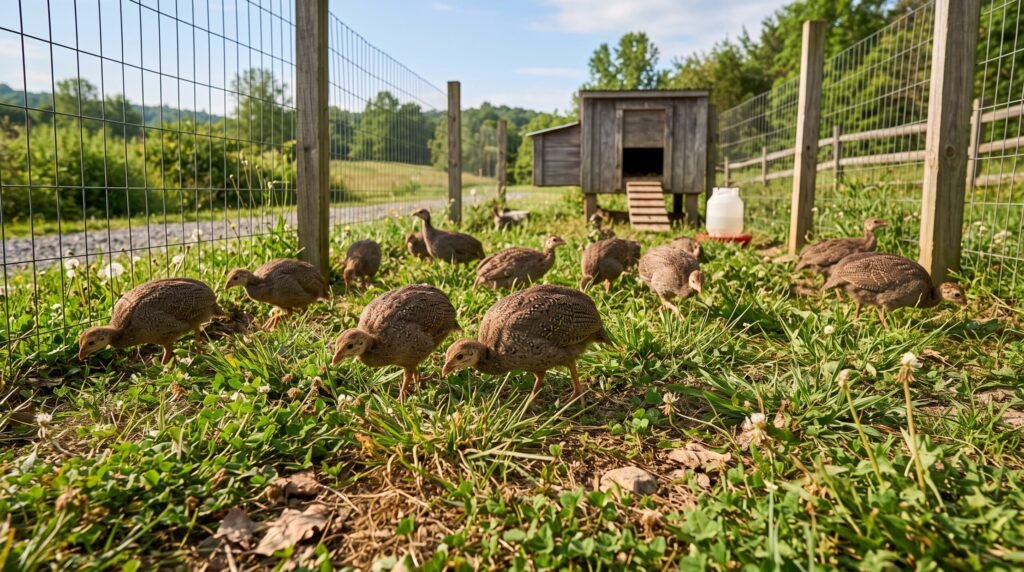
- Keep them confined to the coop and run for several more weeks. Most experienced keepers recommend keeping keets in their new house for about six weeks before allowing any free-ranging. This is what teaches them the location is “home” and dramatically improves the odds they’ll actually return to the coop at night once they’re loose.
- Open the pop door and let them choose. After that settling-in period, open access to a run and let the keets venture out at their own pace rather than pushing them out.
Skipping that confinement period is one of the most common mistakes I see from new keepers — myself included, the first time around. Guineas that are let out too soon simply don’t have a “home base,” and they’re far more likely to wander off, roost in trees, or fail to return at dusk. If you want the full week-by-week picture from hatch through this stage, my guide to raising guinea fowl keets covers everything leading up to this point.
Setting Up the Outdoor Space Before Move-In Day
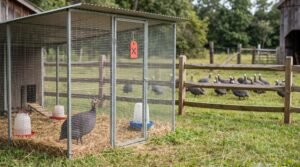
Have the coop and run fully ready before the first keet ever sets foot in it. Trying to finish fencing or weatherproofing after move-in almost always means keets get exposed to a gap or draft you hadn’t caught yet.
A few things worth double-checking:
- Predator-proofing on every side, including the roof, since young guineas can’t yet fly well enough to escape ground predators but are still vulnerable from above.
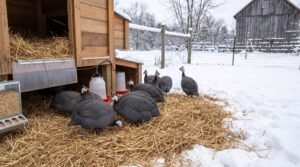
- A draft-free sleeping area that stays dry even in wind-driven rain.
- Enough space for the whole group to move around without crowding, which reduces pecking and stress.
- A shaded area if you’re transitioning during warmer months, so keets have somewhere to cool off during the hottest part of the day.
If you’re still finalizing your setup, my guinea fowl housing guide breaks down coop requirements in more detail, and the space requirements guide is useful for figuring out how much room your specific flock size needs.
Signs a Keet Isn’t Ready Yet
Even after you’ve checked feathering and weather, watch the keets themselves during the first outdoor sessions. Signs that a keet — or the whole batch — needs more brooder time include:
- Shivering or fluffing up excessively rather than moving around normally.
- Huddling together in a tight pile instead of spreading out to explore.
- Lethargy or reluctance to move, especially if it’s paired with drooping wings.
- Peeping loudly and persistently, which is often a distress signal rather than normal chatter.
If you see any of these, it’s not a failure — it just means that particular keet needs another few days or a week inside. Better a short delay than a lost bird.
Final Thoughts
Getting the outdoor transition right comes down to patience: waiting for full feathering, watching the overnight lows rather than the daytime highs, and giving keets a gradual introduction instead of a sudden move. Every flock develops at its own pace, and it’s always worth erring on the side of a few extra days inside rather than rushing a batch out into weather they’re not ready for.
Have you had a batch of keets feather out faster or slower than expected? I’d love to hear how you handled the timing in the comments — it’s one of those details that experienced keepers all seem to learn slightly differently through trial and error.
Frequently Asked Questions
Can guinea keets go outside before they’re fully feathered if I use a heat lamp?
It’s possible for short supervised outings on mild days, but it’s not recommended for full-time housing. A heat lamp in an outdoor coop can help bridge the gap during the last week or two of feathering, but keets without complete feather cover still can’t regulate their body temperature well on their own, and a power outage or lamp failure at night can be fatal.
What temperature is too cold for guinea keets outdoors?
Once fully feathered, most keepers consider nighttime temperatures below 55°F risky without supplemental heat, though the exact threshold depends on your coop’s draft protection and the keets’ condition. Wet or windy conditions lower that safe threshold further, since dampness strips away the insulating effect of their feathers much faster than dry cold air does.
How long should keets stay confined to the coop before free-ranging?
Most experienced keepers recommend keeping keets confined to their coop and run for about six weeks after the initial move outdoors before allowing full free-range access. This settling-in period is what teaches them to treat the coop as home base, which significantly improves the odds they’ll return there safely each evening.
Do all guinea keets in a batch feather at the same rate?
No — even keets from the same hatch can feather out at noticeably different speeds due to genetics, brooder conditions, and individual health. Always judge readiness by the slowest-feathering keet in the group rather than the average, since holding the whole batch back a few extra days is far safer than moving a still-downy keet outside.
Hi, I’m Rayyan. I raise guinea fowl and share practical, research-backed guides for backyard keepers and homesteaders. I combine hands-on flock experience with trusted poultry management and university extension resources to help you raise healthier, more productive birds — with confidence, not guesswork.