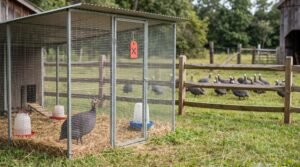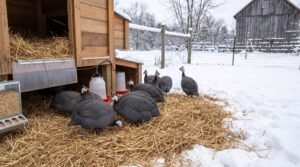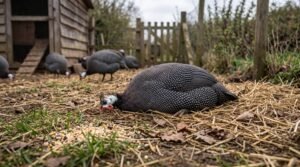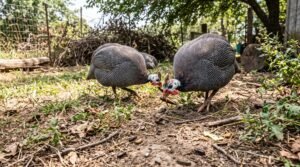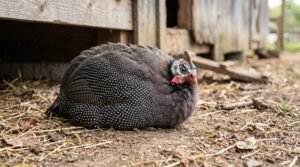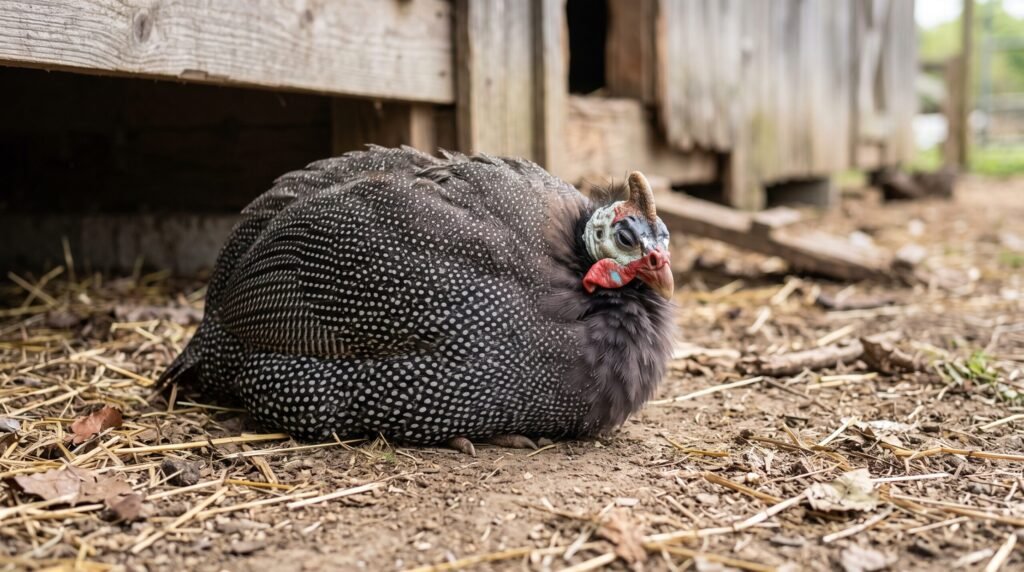
A sick guinea fowl usually shows it through small changes: she drifts away from the flock, eats or drinks less, sits fluffed up, or leaves unusual droppings. Catching those changes early is often the difference between a simple fix and a lost bird.
The tricky part is that guinea fowl are experts at hiding weakness. As prey animals, they act normal for as long as they can, so by the time a bird looks obviously ill, she has often been struggling for days. I stopped waiting for dramatic symptoms and started watching for things that are just slightly off.
This guide covers what normal looks like, the early warning signs from head to toe, which ones are emergencies, and exactly what to do in the first 24 hours.
Here’s a quick reference for the signs covered below and how fast each one needs your attention.
| Warning sign | What it looks like | How urgent |
|---|---|---|
| Separating from the flock | Lagging behind, hiding, skipping the evening roost | Watch closely today |
| Fluffed, hunched posture | Puffed feathers, tucked head, half-closed eyes | Check today |
| Eating or drinking less | Ignoring treats, crop stays empty, or constant thirst | Check today |
| Abnormal droppings | Watery, bright green, bloody, or pasty | Act today |
| Eye or breathing changes | Sneezing, discharge, gaping, swollen face | Act today |
| Limping or weakness | Reluctance to stand, swollen joints, tremors | Act today |
| Twisted neck, paralysis, or sudden deaths | Head twisting, circling, several birds down | Emergency |
Why Guinea Fowl Hide Illness So Well
Guinea fowl have a reputation for being tough, and they often are. But tough is not the same as immune. A weak bird in the wild gets singled out by predators, so instinct tells her to keep up appearances until she physically can’t.
That means you can’t rely on obvious symptoms alone. You need to notice change, and that starts with knowing your flock. Many common guinea fowl diseases begin with the same vague, early signals, so a bird that is simply “off” deserves a closer look even when you can’t name the problem yet.
Learn What Normal Looks Like First
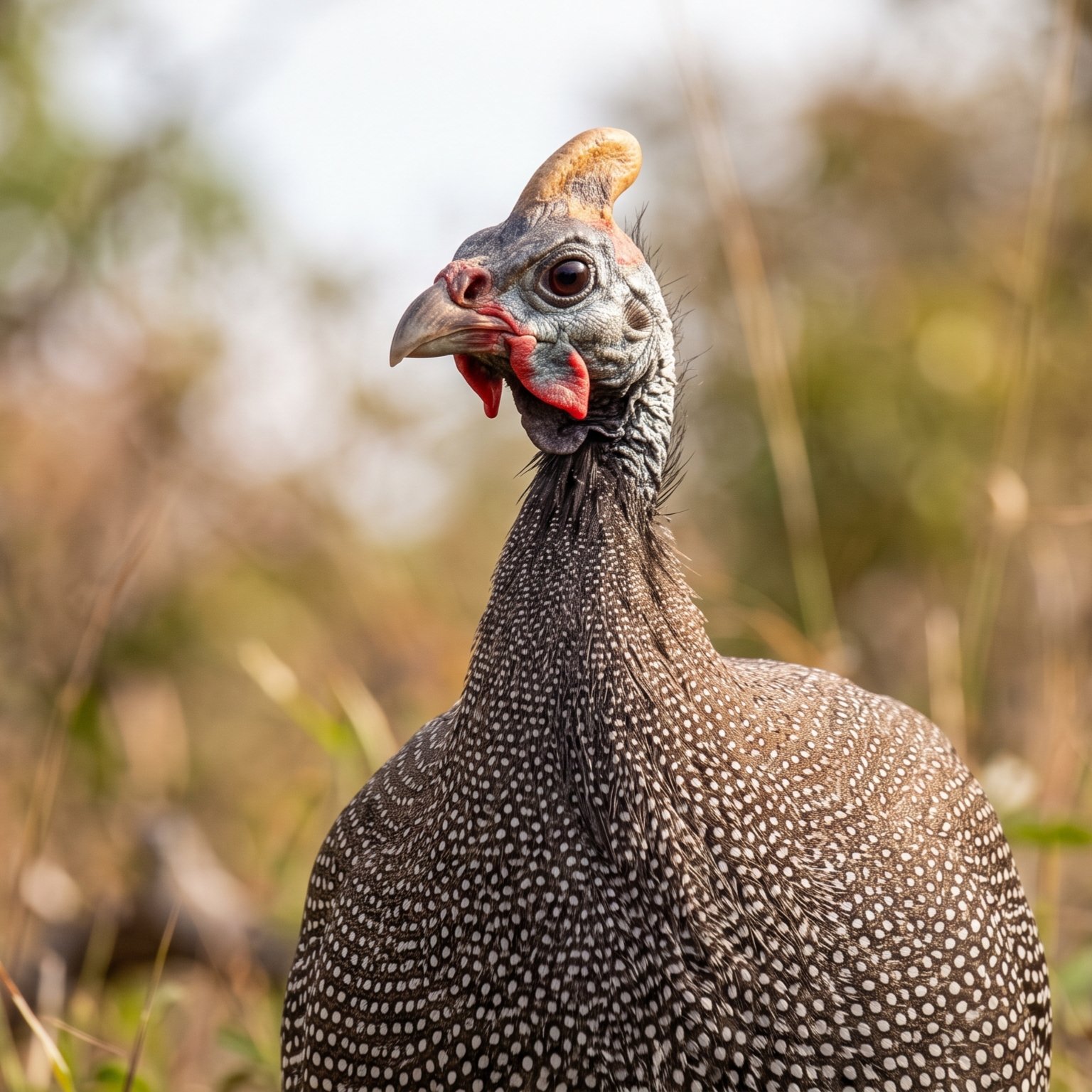
You can only spot “off” if you know “on.” A healthy guinea fowl typically shows:
- Bright, clear, alert eyes
- Smooth, tight feathers and an upright stance
- Staying with the flock and joining the noise
- Rushing to feed or treats
- Firm, brown droppings with a white cap, plus the occasional soft, strong-smelling one (that’s a normal cecal dropping)
- A clean vent and steady body weight
The easiest time to check is dusk, when the birds come in to roost. I do a quick headcount and scan for anyone hanging back. It takes two minutes. If you want a baseline for body condition, you can compare against typical weights by age and sex and weigh any bird that looks thin.
Early Warning Signs, Head to Toe
Behavior and Energy
Behavior changes almost always come first. Watch for a bird that:
- Lags behind when the flock moves
- Stands alone in a corner or hides in vegetation
- Stays in the coop while the others range
- Ignores treats she would normally race for
- Skips roosting or tucks in awkwardly
Guinea fowl are famously loud, so a normally vocal bird that goes quiet is worth noting. Michigan State University Extension lists changes in energy or vocalization, loss of appetite, and trouble walking among the basic signs of a sick bird.
Appetite, Water, and Crop
A bird that stops eating is telling you something. So is one that suddenly drinks far more than the others, or won’t drink at all. Dehydration moves quickly in poultry, so it helps to know how much water guinea fowl normally need.
Feel the crop, the soft pouch at the base of the neck. It should be full at dusk after a day of foraging and mostly empty by morning. A crop that stays hard or doughy overnight can mean impaction or slow emptying. Gently note it, don’t squeeze.
Droppings
Droppings are the fastest window into gut health. One odd dropping isn’t a crisis; a pattern is. Use this as a rough guide:
| Dropping | What it can point to |
|---|---|
| Watery, bright green | Dehydration, stress, or an infection; serious viral disease if paired with breathing or nerve signs |
| Bloody or dark and tarry | Coccidiosis, heavy parasites, or gut damage |
| Pasty and stuck to vent feathers | Digestive upset or stress, especially in keets |
| Visible worms or undigested feed | Heavy worm burden or slow digestion |
Eyes, Face, and Breathing
Look at the head closely. Dull or sunken eyes, discharge, bubbles in the corners, sneezing, coughing, wheezing, or gaping all deserve attention. Swelling around the face or wattles, or wattles turning dark or purplish, is more serious.
One caution: panting with an open beak on a hot afternoon may simply be heat stress, not disease. Check the temperature and shade before you assume the worst.
Feathers, Skin, and Parasites
Dull, ruffled feathers can signal fever or poor health, but they can also mean parasites. Check around the vent and under the wings for lice or mites, and look for scabby lesions on bare skin, which can be a sign of fowl pox. A bird that keeps pecking at her own vent feathers is also telling you something. For patchy plumage, this breakdown of feather loss causes helps separate normal molting from a real problem, and the guide to external and internal parasites covers what to look for next.
Legs, Walking, and Posture
Limping, swollen hocks or joints, sitting down more than usual, or struggling to stand all point to trouble. Check the foot pads for swelling or scabs. Tremors, circling, or a twisted neck are nerve-related signs and belong in the emergency category below.
Egg Production Changes
A sudden drop in laying, thin shells, or misshapen eggs can be an early sign that a hen is unwell. Context matters, though. Guinea hens are seasonal layers, so a pause in cold months is normal. A hen who was laying well and then stops mid-season is the one to examine. If you’re unsure, common reasons for low egg output are worth ruling out first.
Keets Decline Faster
Young birds have almost no reserves. A keet that huddles away from the group, peeps weakly or constantly, refuses food, or has a pasty vent needs attention within hours, not days. If you’ve had losses, the common causes of keet deaths are a good place to start troubleshooting.
Red Flags: When to Call a Vet Right Away
Some signs mean you shouldn’t wait and watch. Call a vet immediately if you see:
- Sudden deaths with no warning signs
- Several birds sick at once
- Swelling of the head or wattles, or purple discoloration
- Green, watery diarrhea alongside coughing or labored breathing
- Twisted neck, circling, tremors, or paralysis
- A bird that can’t stand, or is breathing with her beak open at rest
- Heavy bleeding
The USDA’s Animal and Plant Health Inspection Service asks flock owners to report unexplained illness or higher-than-normal deaths, and it runs a toll-free line for exactly that: 1-866-536-7593. Outside the US, contact your local vet or national animal health authority.
What to Do in the First 24 Hours
If one of your birds looks sick, work through these steps in order:
- Separate her calmly. Use low-stress catching and handling so you don’t add to her stress. Put her in a quiet, warm, draft-free pen, ideally within sight and sound of the flock, since guinea fowl are social.
- Give her a basic check. Feel the crop, look at the vent, eyes, and feet, and note her weight and breathing.
- Offer fresh water and her usual feed. Don’t force anything, and don’t experiment with random remedies.
- Write it down. Note when you first noticed symptoms, what the droppings look like, and whether any other bird is affected. Vets can work with details.
- Call your vet, extension office, or poultry diagnostic lab. Ask before giving any medication.
- Protect the rest of the flock. Clean feeders and waterers, handle the sick bird last, and wash your hands and boots. A regular routine for coop cleaning makes this far easier.
How to Catch Problems Before They Start
Prevention is mostly observation plus a few habits:
- Do a daily headcount and scan at roost
- Keep water fresh and feed balanced
- Check for parasites regularly, especially after wet weather
- Ask a vet whether vaccination makes sense in your area
- Quarantine newcomers before they join the flock, and follow a careful process to introduce new guinea fowl
Conclusion
Guinea fowl hide sickness well, so your best tool is paying attention to what’s normal for your flock. Watch for behavior changes first, then check appetite, droppings, eyes, breathing, and posture. Treat sudden deaths, swelling, and nerve signs as emergencies.
Tonight at roost, try the two-minute check: count heads, watch who hangs back, and feel one crop. Which sign was the first one you noticed the last time a bird in your flock was off? Share it in the comments, and browse more guides in the Health & Disease Management section to keep your flock strong.
FAQ
Is it normal for a guinea fowl to be quiet?
Occasionally, yes. A bird sitting on a nest, a hen after a predator scare, or a bird that is simply resting may be quiet. But a normally noisy bird that stays silent for a day or more, especially alongside poor appetite or hanging back from the flock, should be examined.
Can I treat a sick guinea fowl at home?
Supportive care, such as a warm quiet space, fresh water, and her normal feed, is reasonable while you arrange help. Avoid guessing with antibiotics or dewormers. The wrong product or dose can do harm, and many treatments carry egg and meat withdrawal times, so ask your vet first.
Can guinea fowl catch diseases from chickens?
Many poultry diseases cross species. Fowl pox, for example, affects chickens, turkeys, and guinea fowl, and shared ground and water can spread parasites. If you keep mixed birds, treat illness in one species as a warning for all of them.
Hi, I’m Rayyan. I raise guinea fowl and share practical, research-backed guides for backyard keepers and homesteaders. I combine hands-on flock experience with trusted poultry management and university extension resources to help you raise healthier, more productive birds — with confidence, not guesswork.