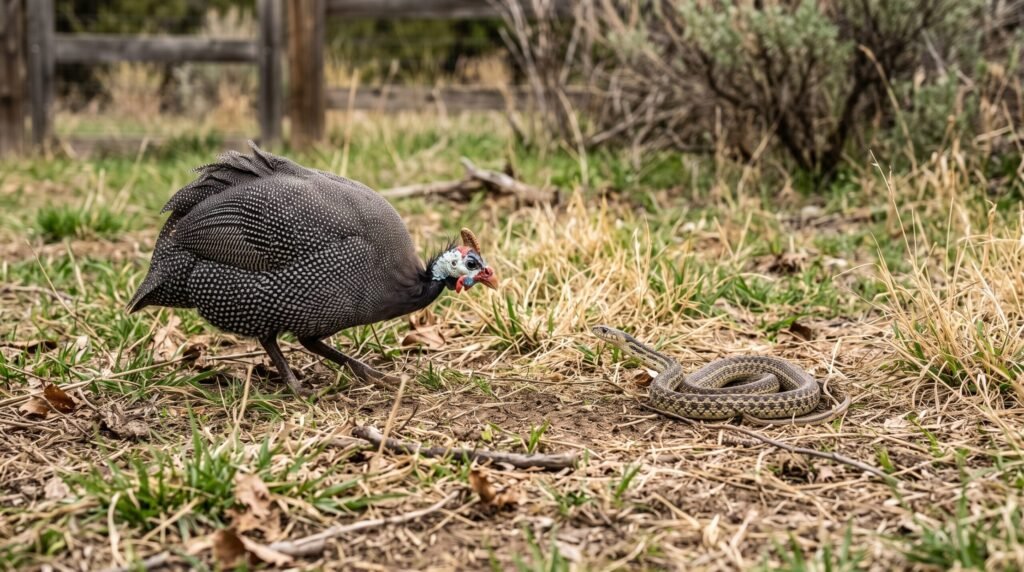
Yes, guinea fowl will kill and eat mice, small rats, and small snakes, and a flock will mob larger snakes until they leave. They’re better at scaring pests off and raising the alarm than at wiping them out, so full-grown rats and big snakes usually get chased away rather than killed.
That gap between reputation and reality trips up a lot of new keepers. You’ll hear that guineas make snakes and rodents disappear, and there’s real truth in it. It just isn’t the whole story. Below, I’ll walk through what guinea fowl realistically do to snakes, mice, and rats, where they fall short, and how to set up your property so they do the most good.
Here’s what you can realistically expect from a healthy, free-ranging flock:
| Pest | Will guineas kill or eat it? | What to expect |
|---|---|---|
| Small snakes (about a foot or less) | Yes | Often pecked to death, sometimes swallowed |
| Larger snakes | Rarely | Mobbed and driven off |
| Venomous snakes | Sometimes | Flock may mob them, but a bite can seriously hurt a bird |
| Mice | Yes | Caught when they cross open ground by day |
| Young or small rats | Yes | Killed and eaten when found |
| Adult rats | Unreliable | Usually scared off, not eliminated |
Do Guinea Fowl Eat or Kill Snakes?
Sometimes, yes. The University of Kentucky’s extension guide to raising guinea fowl says groups of guineas have been known to locate and kill snakes before they can cause harm. That matches what keepers describe, though most of the evidence is firsthand reports rather than controlled studies.
How guineas deal with snakes
Guinea fowl don’t sneak up on anything. They crowd around the snake, circle it, and scream. Birds take turns pecking from every direction, and a well-aimed strike to the head can finish off a small snake. Against a bigger one, the goal seems to be harassment: constant noise and pecking until it leaves.
Snakes generally prefer quiet, undisturbed spots. A flock that patrols all day and shouts at anything unfamiliar is the opposite of that. When my birds bunch up and their calls turn sharp and repetitive, I’ve learned to walk over and look instead of assuming it’s nothing.
Size matters more than courage
Guineas are fearless, but they only weigh around three pounds as adults. That limits what they can actually finish off.
- Small snakes, about a foot or less: can be pecked to death and sometimes swallowed.
- Medium snakes: usually surrounded, pecked, and harassed until they slither away. Some get killed.
- Large snakes: the flock will make a racket, but a bird that size isn’t going to swallow a large snake. Keepers commonly report that guineas rarely eat anything much longer than a foot.
What about venomous snakes?
This is where I’d be careful. Some keepers report flocks killing rattlesnakes, and I believe those stories. But a bite from a venomous snake can seriously injure or kill a guinea fowl, just as it can any small bird. If you live where venomous snakes are common, treat your flock as an early warning system rather than a bodyguard. When the alarm goes off, keep yourself, your kids, and your pets back, and call a local wildlife professional if the snake needs to be removed.
Do Guinea Fowl Eat Mice and Rats?
Mice and small rats, yes. The same Kentucky extension guide states that flocks of guineas will kill and eat mice and small rats, and that their loud calls have been shown to discourage rodents from moving into the area.
Adult rats are a different story. A full-grown rat is strong, quick, and willing to bite when cornered, and a three-pound bird has little reason to pick that fight. In practice, guineas catch the young, the small, and the unlucky.
Why guinea fowl rarely clear out a rat problem
Even a hardworking flock has built-in limits:
- Different schedules. Rats and mice are mostly active at night, while guineas forage by day and roost after dark. Their paths cross mainly at dawn, dusk, and in daylight.
- Hidden homes. Rodents nest in burrows, walls, feed rooms, and woodpiles. Guineas don’t scratch or dig much, so they rarely get at those spots.
- Free food. Spilled feed and open grain bins keep rodents coming back no matter how many birds you have.
So think of guineas as one layer of rodent control, not the whole system.
How to Help Your Guinea Fowl Work Better
A few simple choices make a real difference in how much pest control you actually get:
- Let them roam. Birds locked in a small pen can’t patrol anything. If your setup allows it, letting them free-range gives them the room to hunt.
- Keep the flock together. Mobbing is a team behavior, and guineas are strongly social. Getting the right number of birds for your property matters more than people expect.
- Don’t overfeed. Extension resources on raising guinea fowl point out that restricting feed encourages them to spend more time hunting insects. Just make sure they still get a balanced diet.
- Remove hiding places. Tall weeds, debris piles, and stacked lumber shelter both snakes and rodents.
- Lock up the feed. Store grain in metal or heavy-duty containers with tight lids.
Where Guinea Fowl Fall Short
I like guineas a lot, but I wouldn’t hand them sole responsibility for pest control. Here’s where they leave gaps.
Eggs and keets are still at risk. Some snakes eat eggs and baby poultry. Guinea hens often lay in hidden ground nests, which are easy targets, and young keets are small enough for a snake or rat to take.
Nights are unguarded. Guineas roost and sleep after dark, which is when rats are busiest. Secure housing for your guinea fowl with sturdy wire mesh, tight gaps, and a solid door does the real work overnight. It also helps to train your birds to return to the coop at dusk, so they aren’t roosting somewhere exposed.
They’re loud. The same alarm calls that unsettle snakes and rodents will also be heard by your neighbors.
They’re strongest on insects. Their main natural food is insects, and that’s where they shine, especially when it comes to ticks. Snake and rodent control is a useful bonus, not the main event.
Conclusion
Guinea fowl will kill and eat mice, small rats, and small snakes, and they’ll harass larger snakes into leaving. They won’t guarantee a pest-free property, and a bite from a venomous snake is a real risk to the birds.
Your best next step is simple: walk your property this week and look for the things that invite pests, like loose feed, brush piles, and gaps in the coop. Fix those, then let your flock handle the rest.
Have your guinea fowl ever caught something that surprised you? Tell me about it in the comments. And if you want more ways to keep your flock and property safe, browse the rest of the predator and pest control articles.
FAQ
Can a guinea fowl die from a snake bite?
Yes. A bite from a venomous snake can seriously injure or kill a guinea fowl, as it can any small bird. If you suspect a bite, contact a veterinarian right away, and don’t approach the snake yourself.
Will guinea fowl keep snakes out of the coop at night?
Don’t count on it. Guineas sleep after dark, and snakes can slip through small gaps to reach eggs and young birds. Fine wire mesh, closed gaps, and a secure door protect your flock far better than the birds’ own vigilance.
Do guinea fowl attract rats?
The guineas themselves don’t, but spilled feed does. Rats show up wherever food is easy to reach. Storing feed in sealed containers and keeping the coop clean removes the biggest draw.
Is it safe to use rat poison around guinea fowl?
I avoid it around free-ranging birds. Guineas can pick up bait directly, and they may also eat rodents that have been poisoned. Enclosed traps placed where birds can’t reach them are a safer choice, and if you use any rodenticide, follow the product label and local guidance.
Hi, I’m Rayyan. I raise guinea fowl and share practical, research-backed guides for backyard keepers and homesteaders. I combine hands-on flock experience with trusted poultry management and university extension resources to help you raise healthier, more productive birds — with confidence, not guesswork.