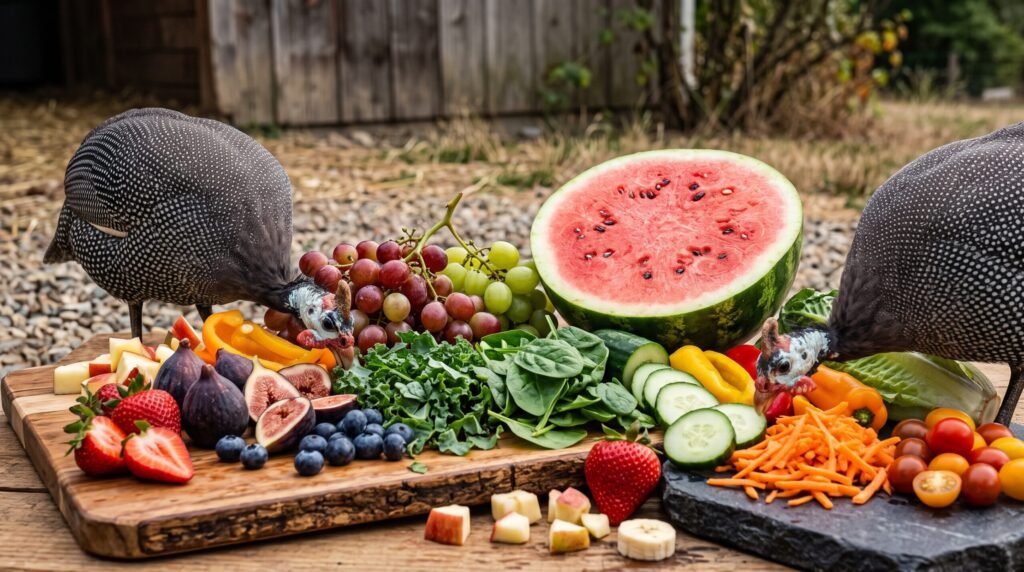
Yes, guinea fowl can eat most fruits and vegetables. Leafy greens, melon, berries, squash, and ripe tomatoes all make safe treats, as long as they sit on top of a complete feed and a short list of dangerous foods, like avocado and raw dried beans, never reaches the run.
Guineas are foragers by nature. Left to roam, they strip dandelions, chase grasshoppers, and peck at anything that looks edible. That habit is exactly why so many keepers wonder whether the produce bowl from the kitchen is fair game. Mostly, it is. But “mostly” is where flocks get into trouble, because a handful of common foods are toxic, and too many sweet treats can crowd out the feed that keeps birds healthy.
In this guide, I’ll walk through the vegetables and fruits I offer, the foods I’d never offer, how much is enough, and how to adjust for keets. If you want the bigger picture first, my overview of what guinea fowl eat day to day is a good companion read.
Here’s the short version before we get into the details:
| Category | Examples | How to serve |
|---|---|---|
| Everyday favorites | Leafy greens, cabbage, broccoli, squash, cucumber, ripe tomatoes | Chopped or grated, a few times a week |
| Occasional treats | Melon, berries, apples, grapes, bananas, sweet corn | Small portions, because fruit carries more sugar |
| Never feed | Avocado, raw or dried beans, green potatoes and peels, chocolate, moldy food | Skip entirely |
Why Fruits and Vegetables Belong in a Guinea Fowl’s Diet
Produce won’t replace a balanced feed, but it does real work. eXtension’s guinea fowl guide explains that adult guineas need some greens to keep their digestion running smoothly, which is why they graze on grass, dandelions, and weeds all day.
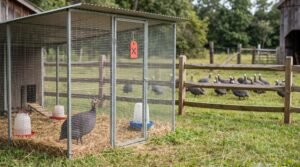
If your birds roam, they’ll cover much of this themselves, especially when your land has the right plants and grasses growing on it. Confined birds are a different story. They can’t go looking for greens, so you have to bring the greens to them. The same guide suggests supplemental greens, such as leafy alfalfa, for confined birds to peck. And if you’re still deciding between free-ranging and confining your flock, this is one more factor worth weighing.
Fruit is a different kind of bonus. It’s not a nutritional must-have, but it’s a sweet, occasional treat that adds variety and gets the whole flock running toward you.
Safe Vegetables for Guinea Fowl
These are the vegetables I reach for first. Most are fine raw, as long as they’re chopped small or grated.
| Vegetable | Notes |
|---|---|
| Kale, spinach, chard, romaine | Chop them up, or hang a whole head for pecking |
| Cabbage, broccoli, and other brassicas | Cabbage hung from a string keeps confined birds busy |
| Dandelion greens and garden weeds | Free, fresh, and usually a favorite |
| Carrots | Grate them so they’re easy to swallow |
| Pumpkin and winter squash | Split them open and let the birds pick at the flesh |
| Cucumber and zucchini | Hydrating and low in calories |
| Bell peppers | The flesh and seeds are both fine |
| Peas and sweet corn | Cooked or thawed; corn is often a top favorite |
| Ripe tomatoes | Ripe fruit only, never green ones or the vines |
| Turnips and swede | Chopped or grated; a handy winter green |
| Cooked potato or sweet potato | Small amounts, fully cooked, and never green |
Variety matters more than volume. Rotating two or three vegetables through the week is better than dumping a pile of one thing into the run.
Safe Fruits for Guinea Fowl
Fruit has more sugar than vegetables, so think of it as dessert rather than dinner. Good choices include:
| Fruit | Notes |
|---|---|
| Watermelon and other melons | Flesh and seeds are fine; lovely chilled on hot days |
| Strawberries, blueberries, raspberries | Serve whole or halved |
| Apples and pears | Slice them and remove the core and seeds |
| Grapes | Halve them so they’re easy to swallow |
| Bananas | Flesh only, in small amounts |
| Figs | Many guineas take to them readily |
| Peaches, plums, cherries | Flesh only; always remove the pit |
| Citrus (oranges, grapefruit) | Optional and occasional; plenty of birds ignore it |
In my experience, watermelon disappears first, and there’s usually an argument over the last piece of rind. That’s normal guinea behavior, which is why I scatter treats widely rather than piling them in one spot.
Foods Guinea Fowl Should Never Eat
A few foods are genuinely dangerous to poultry, and small portions don’t make them safe. Keep these out of the run completely:
| Food | Why it’s a problem |
|---|---|
| Avocado (skin, pit, and leaves especially) | Contains persin, which is toxic to poultry; sources disagree on the flesh, so I skip it all |
| Raw or dried beans | Contain lectins that are toxic unless the beans are thoroughly cooked |
| Green potatoes, peels, and sprouts | Contain solanine, as do potato and tomato plant leaves |
| Green (unripe) tomatoes | Nightshade relatives that carry the same risk |
| Chocolate, caffeine, alcohol | Toxic to birds |
| Moldy or spoiled food | Mold toxins, plus a botulism risk when scraps rot |
| Salty, fried, or heavily seasoned leftovers | Poultry kidneys handle excess salt poorly |
| Onions and garlic | Strong flavors can taint eggs, so skip them for laying hens |
| Rhubarb | Commonly listed among foods to avoid for poultry |
Before you empty the compost bowl into the run, check your kitchen scraps against this list. And if you ever aren’t sure about a food, leave it out.
How Much Should You Feed?
Keep treats to roughly 10% of the daily diet. That’s a widely used rule of thumb among poultry keepers rather than a hard scientific limit, but it works because it keeps birds eating the balanced feed that does the heavy lifting.
Extension guidance for backyard flocks offers another easy test. Give no more scraps than the birds can finish in about 20 minutes, and never let leftovers rot. The same source warns that excessive scraps and greens can hurt egg production. It’s written for chickens, but guinea keepers borrow it all the time, and I do too.
A few habits make this easy to manage:
- Serve after the main feed. Birds that have already eaten are less likely to fill up on treats.
- Start small. A couple of tablespoons of chopped produce per bird is a sensible starting point. Adjust based on what’s left over.
- Introduce one new food at a time. If droppings change, you’ll know the culprit.
- Size treats to your flock’s actual intake. The feed calculator can give you a baseline for how much feed your birds go through.
- Fit treats into your routine. They slot in neatly alongside your regular feeding schedule.
How to Prepare and Serve Produce
Good prep takes a couple of minutes and prevents most problems:
- Wash everything. Rinse off dirt and any pesticide residue.
- Chop or grate to bite size. Guineas swallow food whole, so smaller is safer.
- Remove pits, cores, and large seeds. Stone fruit pits and apple cores are the main culprits.
- Scatter or hang it. Spreading food out gives shy birds a fair chance, and a hanging cabbage gives confined birds something to peck.
- Clear leftovers the same day. Wet produce rots fast, and it attracts rodents and flies.
Feeding Fruits and Vegetables to Keets
Keets are a special case. The eXtension guide mentioned earlier recommends a starter with 24% to 26% protein for young birds, and produce shouldn’t water that down. Treat fruits and vegetables as tiny extras, never a replacement for starter feed.
When you do offer greens, chop them very finely and make sure grit is available. The same guide stresses that grit should be on hand whenever birds are eating vegetation, since it helps them grind food and avoid digestive trouble. For the full routine, including when to start extras, my keet care walkthrough covers the early weeks in detail.
Seasonal Ideas
Produce can do different jobs at different times of year:
- Summer: Chilled watermelon and cucumber are a welcome treat, though they don’t replace shade and fresh water. My notes on keeping birds comfortable through summer heat go deeper.
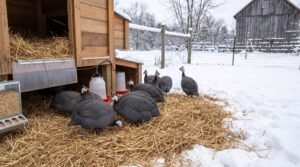
- Winter: When cold weather thins out natural forage, cabbage, turnips, and squash are easy, inexpensive stand-ins for the greens birds would normally find on their own.
Signs You’re Feeding Too Many Treats
Watch your flock for these signals:
- Loose, watery droppings
- Birds walking past their regular feed
- Noticeable weight gain
- A dip in egg laying
If any of these show up, cut back on treats for a week and see whether things settle. If they don’t, illness may be the cause, so check the list of common guinea fowl health problems.
Conclusion
Guinea fowl can safely enjoy a wide range of fruits and vegetables. Stick to leafy greens, squash, cucumber, melon, and berries. Keep treats to about 10% of the diet. Steer clear of avocado, raw dried beans, green potatoes, and anything moldy. Keets get tiny, finely chopped portions with grit on hand.
Your next step is simple. This week, pick one vegetable and one fruit from the lists above, chop them small, and scatter them after the regular feed. Watch which one disappears first.
Which fruit or vegetable do your guineas fight over? I’d love to hear in the comments. And if you want more practical feeding guidance, browse the Feeding & Nutrition section for more articles like this one.
FAQ
Do free-ranging guinea fowl need extra fruits and vegetables?
Usually not. Adult guineas that range freely find most of what they need on their own, including insects, seeds, and plenty of greens. Produce is optional enrichment for them. It becomes more useful when birds are confined or when winter strips the ground bare.
Can guinea fowl eat frozen or cooked vegetables?
Yes, both work. Cooked peas are a popular treat, and frozen sweet corn is a favorite in summer heat. Serve them plain, with no salt, butter, or seasoning. If you ever cook dried beans for the flock, boil them thoroughly first, since raw beans are toxic.
Can guinea fowl eat the same fruits and vegetables as chickens?
Largely, yes. The safe and unsafe lists overlap almost completely, and the same foods are toxic to both. If you’re also wondering about the feed itself, I cover whether chicken feed works for guineas in a separate article.
Are fruit seeds and pits safe for guinea fowl?
It depends on the fruit. Melon seeds are fine, and many guineas enjoy them. Remove pits from stone fruits like peaches, plums, and cherries. For apples and pears, I take out the core as a precaution, since the seeds contain trace amounts of compounds you don’t want your birds eating regularly.
Hi, I’m Rayyan. I raise guinea fowl and share practical, research-backed guides for backyard keepers and homesteaders. I combine hands-on flock experience with trusted poultry management and university extension resources to help you raise healthier, more productive birds — with confidence, not guesswork.