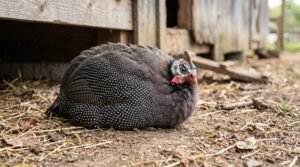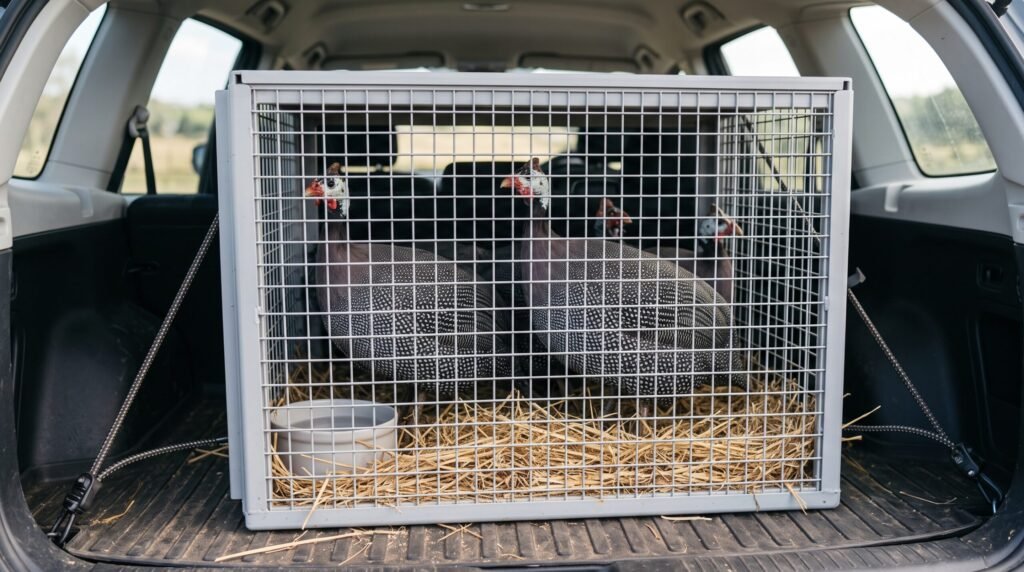
To transport guinea fowl safely, catch them calmly at dusk, load a few birds into a well-ventilated crate with a solid floor and dry bedding, keep it shaded and secured inside your vehicle, and give them water and space the moment you arrive.
Guineas are not chickens. They’re alert, quick to bolt, and loud when frightened. A rough catch or a flimsy box can turn a simple pickup into a scramble of feathers and noise, and the bird can stay on edge long after the drive is over. A little preparation prevents most of that.
In this guide, I’ll walk you through choosing a crate, catching and loading birds without injury, handling heat and cold on the road, and settling your guineas in at the other end.
Here’s the short version before we get into the details:
| Stage | What to do |
|---|---|
| Crate | Good airflow, smooth or solid floor, secure latch, no openings a head can push through |
| Group size | A few birds per crate, with room to sit without piling |
| Catching | Dusk or dim light, quiet movements, two points of contact |
| Climate | Shade and airflow; never the trunk or an airtight space |
| Water | Offer water roughly every four hours on longer trips |
| Arrival | Out of the crate promptly, into a secure pen, water first |
Why Guinea Fowl Need Extra Care in Transit
Guinea fowl are flighty by nature. Their first instinct when scared is to run or take off, and since guinea fowl can fly, a bird that escapes at a pickup point or inside a car is hard to recover. They’re also noisy, so a panicked crate of guineas can be genuinely distracting for a driver.
That’s why crate choice, calm handling, and temperature control matter more than any fancy gear. Get those three right and most trips go smoothly.
Choosing the Right Crate
A good transport crate keeps birds secure, lets air move through, and doesn’t hurt them if it shifts on a turn. When I’m comparing crates, I look for these features:
- Ventilation on several sides. Airflow is critical in warm weather, and airtight containers are dangerous.
- A solid or smooth floor. Wire floors can trap toes, especially when a crate slides.
- Head-safe openings. If birds can push their heads through gaps, their necks can be injured when the crate moves or gets stacked.
- A reliable latch. A bird that gets out mid-trip can be lost or hurt.
- Smooth edges and moderate height. Frightened guineas tend to jump, so I avoid very tall crates.
Here’s how the common options compare:
| Crate type | Works well for | Watch out for |
|---|---|---|
| Plastic poultry crate | Adults and repeat trips; easy to clean | Check that vent slots are too small for heads |
| Hard-sided pet carrier | Pairs of birds, vet visits, short hauls | Limited space; confirm good airflow and latches |
| Ventilated cardboard box | One-off short trips, a few keets | Weakens when damp; not reusable; must close securely |
| Wire cage | Best avoided | Toes catching, poor comfort, droppings spreading |
How many birds per crate
Virginia Cooperative Extension’s poultry transport guidance recommends crates that hold no more than four to six adult birds, which limits piling, improves airflow, and keeps body heat down. Guineas are lighter than large chickens but much jumpier, so my own rule of thumb is to load fewer, usually two to four adults in a medium crate. The goal is simple: every bird should be able to sit comfortably without being stacked on another.
Bedding for the crate
Add a deep layer of loose, dry litter. It soaks up droppings, stops birds from slipping, and keeps them cleaner. Shavings and straw both work, and the bedding options for guinea fowl are worth a look if you haven’t settled on a favorite.
Catching and Loading Guinea Fowl Calmly
Transport really starts the moment you reach for the first bird. Noisy, aggressive catching causes panic and injuries before you’ve even left the yard. A panicked guinea can also leave you holding a fistful of feathers, which is a good sign you’ve done it the hard way.
Here’s the process I follow:
- Set up the crate first. Add bedding, check the latch, and place it close to where you’ll be catching.
- Work in low light. Dusk, when birds are in the coop or roosting, is ideal. Dim lighting keeps the flock calmer.
- Move slowly and quietly. Don’t chase. Corner birds gently in a confined space.
- Use two points of contact. Support the body and secure the wings with one hand while the other steadies the legs.
- Lower each bird into the crate. Never toss or drop them in.
- Check before you latch. Make sure no wing, foot, or head is caught in the door.
If you want a deeper walkthrough of the technique, I cover it in my guide to catching and handling guinea fowl without stress.
A few things to avoid, based on extension guidance and my own experience:
- Never catch or carry birds by the neck, head, or tail.
- Avoid holding them by the legs or wings alone.
- Never hold a bird upside down, since inverted restraint is stressful and can even be fatal.
One more detail people overlook: if you’re hauling several crates with males in them, don’t set crates side by side where the males can see each other. They may try to fight through the crate and damage combs and feathers. I also keep birds that already know each other together, rather than mixing strangers in the same box.
Keeping Guinea Fowl Safe and Comfortable on the Road
Once the birds are loaded, your job is to keep conditions steady. Four things matter most.
Heat and airflow
Heat is the biggest danger. Watch for panting, an open beak, or lifted wings, which are signs a bird is struggling with the temperature.
- Never use the trunk. Birds can suffocate or be overcome by exhaust fumes or heat there.
- Keep crates out of direct sun. Dark crates and trailers can turn into ovens quickly.
- Don’t block airflow. If you stack crates, leave space for air to pass through.
- Remember that airflow stops when you do. In slow traffic or at a stop, open windows until you’re moving again.
- Skip open truck beds at highway speeds. Drafts can irritate eyes and damage feathers.
On hot days, shading the crate with a light-colored sheet helps, as long as air can still move through. Extension guidance also cautions against moving birds from an air-conditioned cabin straight into hot outdoor air, so ease the temperature change if you can. For more on warm-weather risks, see my notes on preventing heat stress in guinea fowl.
Cold and wet weather
In cold weather, the priorities flip. Avoid drafts and keep the crate dry. If birds huddle in a corner, crouch, or fluff their feathers, they may be getting cold. My winter care tips for guinea fowl cover how to keep birds comfortable once they’re home.
Light, noise, and securing the crate
I drape a light sheet over part of the crate so the inside stays dim and calm while air still moves. Then I strap the crate down or wedge it so it can’t slide. Drive smoothly, brake gently, and keep the crate inside the passenger area rather than somewhere exposed.
Water and feed
Offer water continuously if you can, or at least about every four hours on a longer trip. Removable waterers work well because full ones spill while you drive. Bring your own feed and water from home, since some birds won’t touch unfamiliar food for the first day or more. For daily numbers once they’re settled, I explain how much water guinea fowl need.
Transporting Keets and Young Birds
Very young birds can’t regulate their own body temperature, so they need to stay warm in transit. At the same time, watch them for panting, because keets can overheat in a closed car just as quickly as they chill in a cold one.
A small, ventilated box with non-slip bedding works well for a few keets. Keep the group small, secure the lid, and keep the box level on a seat or the floor of the cabin. Once you’re home, my week-by-week keet care guide walks you through the first weeks.
Paperwork and Health Rules Before You Travel
If you’re moving birds within your own property or a short local trip, you probably won’t need any paperwork. Crossing state lines is different. In the US, interstate movement of poultry can require documents such as a certificate of veterinary inspection or NPIP paperwork, and requirements vary by state. The USDA explains how the National Poultry Improvement Plan works, but the destination state’s animal health office has the final word, so contact them before you load any birds.
Local ordinances can matter too, even for a short move. If you’re relocating to a new area, check the legal rules for keeping guinea fowl there first.
Settling Guinea Fowl In After the Trip
The trip isn’t over when the car stops. How you handle the first day shapes how quickly your guineas settle.
- Get them out of the crate. Leaving birds packed in the transport crate after arrival isn’t humane. Move them promptly into a proper pen with enough room, and check space requirements for guinea fowl when you plan it.
- Offer water first, then familiar feed.
- Keep them confined for a while. Newly moved guineas often try to return to wherever they came from, so I keep them secured for a few weeks before free-ranging. This guide to preventing guinea fowl from getting lost goes into more detail.
- Quarantine new arrivals. Keep them separate from your existing flock for a few weeks, then use a gradual process to introduce new guinea fowl to an existing flock.
- Watch for illness. Lethargy, poor appetite, or unusual droppings in the first weeks deserve attention, and my overview of common guinea fowl diseases can help you recognize problems early.
- Clean and disinfect the crate. Dirty crates spread bacteria and parasites, so wash them after every trip and store them empty and off the floor to keep rodents from nesting in them.
FAQ
How long can guinea fowl stay in a transport crate?
There’s no single safe number, so keep trips as short and direct as possible. Extension guidance suggests offering water roughly every four hours. If the journey stretches overnight, move the birds into a proper enclosure rather than leaving them crated.
Is it better to transport guinea fowl at night?
Cooler hours reduce the risk of heat stress, and dim light helps keep birds calm. Arriving around dusk can also help because they’re ready to settle. That said, choose whatever keeps the trip short, cool, and safe. Covering part of the crate helps with headlight flashes.
Should I transport guinea fowl alone or in groups?
Guineas are social, so I prefer to transport birds that already know each other together, in a crate sized so nobody is crowded. Just keep crates with males out of each other’s line of sight.
Conclusion
Safe transport comes down to a few habits. Choose a ventilated crate with a smooth floor and a secure latch, catch birds quietly at dusk, keep them cool, shaded, and watered, and get them into a proper pen as soon as you arrive. Handle them gently and most of the stress simply never happens.
Your next step is easy: check your crate today for airflow, head-safe openings, and a solid latch, and add it to your pre-trip routine before the next pickup or vet visit.
What’s the longest trip you’ve taken with guinea fowl, and what would you do differently next time? Share your experience in the comments, and if you’re planning a move, take a look at my other housing and care guides while you’re at it.
Hi, I’m Rayyan. I raise guinea fowl and share practical, research-backed guides for backyard keepers and homesteaders. I combine hands-on flock experience with trusted poultry management and university extension resources to help you raise healthier, more productive birds — with confidence, not guesswork.